Category
Communication and Media Studies
-
Communication and Media Studies, Digital Scholarship, Humanities
Open Scholarship in the Humanities
15.11.24 | Permalink | Comments Off on Open Scholarship in the HumanitiesExploring the rise of open scholarship in the digital era and its transformational impact on how knowledge is created, shared, and accessed, this open access book offers new insights on the history, development, and future directions of openness in the humanities and identifies key drivers, opportunities, and challenges. The concept of open research is reconfiguring […]
-
Communication and Media Studies, Cultural Studies, Digital Scholarship, Historical Studies, Humanities, Life Writing
Migration Experiences: Acknowledging the Past, and Sustaining the Present and Future
05.12.18 | Permalink | Comments Off on Migration Experiences: Acknowledging the Past, and Sustaining the Present and FutureAustralia is recognised as one of the world’s most culturally and ethnically diverse nations. Immigration has historically played an important role in the nation’s economic, social and cultural development. There is a pressing need to find innovative technological and archival approaches to deal with the challenge to digitally preserve Australia’s migrant heritage, especially given the ageing of the European communities that were the first to come under the postwar mass migration scheme. This paper reports on plans for a national collaborative project to develop the foundational infrastructure for a dynamic, interoperable, migrant data resource for research and education.
The Migration Experiences platform will connect and consolidate heterogeneous collections and resources and will provide an international exemplar underscoring the importance of digital preservation of cultural heritage and highlighting the opportunities new technologies can offer.
-
Communication and Media Studies, Digital Scholarship, Museum Studies
Engaging Collections and Communities: Technology and Interactivity in Museums
01.03.18 | Permalink | Comments Off on Engaging Collections and Communities: Technology and Interactivity in MuseumsThe uptake of Web 2.0 services at the start of this century has brought new freedoms in terms of museums’ relationship with the public. Historically, museums, like so many institutions, have understood their role as containing, controlling and regulating public interaction with a protected and guarded resource. Authority has been generated through this controlled interaction. The very notion of mediated access rests on the intermediary role of curators and institutions. However, social media now facilitates far greater dialogue between experts and the public, levelling the traditional hierarchies and moving from the one-way information flow to a two-way relationship. Today online communities of interest give new value to the electronic dimension of institutions, sustaining the interest base and attracting visitors through the door. The changing nature of museums, bringing with them shifting notions of curatorship, has prompted radical changes in museum practices. Museums are not only guardians but are entrepreneurs – linking, facilitating and marketing collections.
-
Communication and Media Studies, Digital Scholarship, Literary Studies, Postcolonial Studies
Digital Postmodernism and Postcolonialism
05.01.18 | Permalink | Comments Off on Digital Postmodernism and PostcolonialismDigital interactivity has triggered a transformation whose impact is greater than that of any other innovation in the history of technologies of communication. According to a 2016 Ericsson Mobility Report, over 90% of the world’s population will be covered by mobile broadband networks by 2021. “The world has been redrawn,” claims the Internet critic Andrew Keen, “as a distributed network.” It is becoming evident that we too are being redrawn as human beings, as individuals, and as citizens. At the heart of the change from analogue and print to digital is the capacity for connectedness that information technology brings – connectedness of information in and between databases, between experts and the public, between communities across the world, and between the arts and the sciences.
-
Communication and Media Studies, Digital Scholarship, Humanities, Postcolonial Studies
Things Fall Apart: Identity in the Digital World
12.10.17 | Permalink | Comments Off on Things Fall Apart: Identity in the Digital WorldWe are in the midst of a data revolution that has penetrated the daily life of most of the world’s population so suddenly and deeply that it is impossible to grasp the extent of its impact on the concepts of self and identity. At the same time as accessing the ever-expanding realm of data via our networked devices, we are also contributing to it with every click or touch and generating a new kind of self in the free and open space of the Internet – ‘the world’s largest ungoverned space’. Can the new inclusiveness that digital technologies have given us be understood as the fulfilment of campaigns waged by critical theories in the late twenty-first century against the authority and centrality of mainstream narratives and the visions they promulgated of the world and ourselves? Or are we facing a new kind of imperialism as we fall under the spell of algorithmic culture?
-
Biography, Communication and Media Studies, Digital Scholarship, Life Writing
Data Portraits: Identity, Privacy, and Surveillance
30.04.17 | Permalink | Comments Off on Data Portraits: Identity, Privacy, and Surveillance“Our pasts are becoming etched like a tattoo into our digital skins,” wrote J. D. Lasica in 1998. Since then, developments relating to online identity and privacy have progressively borne out his provocative assertion. Today, mass surveillance of our lives has become commonplace and endemic, leading to what Andrew Keen has described as a “catastrophe of abundance” of personal data.
When Time named its 2006 Person of the Year as “You,” it was signaling a global trend toward deep integration of data and algorithmic culture into our lives with the rise of social media. On its front cover, a computer screen displaying the word “You” served as a reflective mirror. “Yes you,” the caption explains, “You control the Information Age,” and “you” are responsible for “founding and framing the new digital democracy.” The mirror symbolically captured the open-endedness of the Internet and its readiness to be filled with reflections of ourselves while the “you” defined this moment in terms of individual empowerment.
-
Biography, Communication and Media Studies, Cultural Studies, Life Writing
Coda: Data Generation
20.09.15 | Permalink | Comments Off on Coda: Data GenerationAuto/biography is just one of many disciplines that have been deeply influenced by advances in digital media and computing, and that have required new theoretical approaches to help understand the changes. As I have argued elsewhere, however, it may be that the digital revolution has had a more profound effect on biography and life writing than on any other branch of literature, perhaps any branch of the arts. In the 1990s, personal web pages and chatrooms offered new modalities for public and private expression that greatly facilitated life writing; this was a transformational period, opening up possibilities that have been multiplying ever since. In today’s era of ubiquitous computing and an increasingly data-driven global society, the Web has evolved to be an interface to a deeper layer of stores and flows of data that can be made manifest in many ways, in different views, and on any number of devices.
-
Communication and Media Studies, Digital Scholarship, e-Research, Humanities
Advancing Digital Humanities
05.11.14 | Permalink | Comments Off on Advancing Digital HumanitiesAdvancing Digital Humanities moves beyond definition of this dynamic and fast growing field to show how its arguments, analyses, findings and theories are pioneering new directions in the humanities globally. Sections cover digital methods, critical curation and research futures, with theoretical and practical chapters framed around key areas of activity including modelling collections, data-driven analysis, and thinking through building. These are linked through the concept of ‘ambitious generosity’, a way of working to pursue large-scale research questions while supporting and enabling other research areas and approaches, both within and beyond the academy.
-
Communication and Media Studies, Cultural Studies, e-Research
Connecting and Enabling the Humanities and Social Sciences
06.02.12 | Permalink | Comments Off on Connecting and Enabling the Humanities and Social SciencesIn today’s era of ubiquitous computing and global online connectivity, e-research is enriching research across a growing range of academic disciplines. Its reach is extending beyond the science and technology fields where it originated, and is now “penetrating the social sciences and humanities, [though] sometimes with differences in accent and label” (Jankowski, 2009). This chapter discusses some of the ways in which humanities researchers are embracing new digital resources, formats and modes of collaborating in ways that further the traditional goals of humanities research, “to better understand ourselves, our history, and our cultural heritage” (Cole, 2007). Topics covered in this chapter include the growing opportunities for collaborative and interdisciplinary approaches, building the information commons for public benefit, and the growing need for strategic investment in research infrastructure to support the humanities.
-
Communication and Media Studies, Cultural Studies, e-Research, Historical Studies
Toward a Global Digital History
25.11.11 | Permalink | Comments Off on Toward a Global Digital HistoryDigital history spans disciplines and can take many forms. Computer technology started to revolutionize the study of history more than three decades ago, and yet genres and formats for recording and presenting history using digital media are not well established and we are only now starting to see large-scale benefits. New modes of publication, new methods for doing research, and new channels of communication are making historical research richer, more relevant, and globally accessible. Many applications of computer-based research and publication are natural extensions of the established techniques for researching and writing history. Others are consciously experimental. This chapter discusses the latest advances in the digital history field and explores how new media technologies are reconfiguring the study of the past.
about
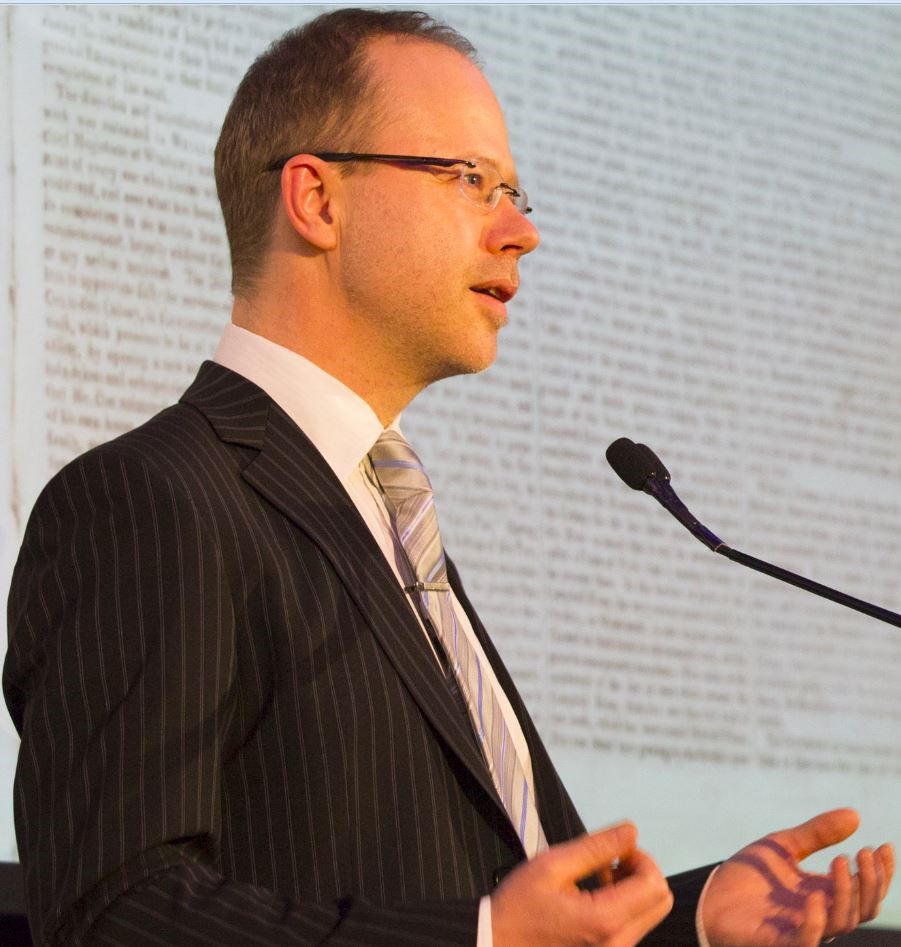
Paul Arthur is Vice-Chancellor’s Professorial Research Fellow, and Professor of Digital Humanities and Social Sciences, at Edith Cowan University, Western Australia. He speaks and publishes widely on major challenges and changes facing 21st-century society, from the global impacts of technology on communication, culture and identity to migration and human rights. Paul Arthur has over 100 publications including 13 books, and has received A$10M in grant funding, individually and in collaboration. His latest book is Open Scholarship in the Humanities (Bloomsbury 2024, with Lydia Hearn). A Fellow of the Royal Historical Society, he has held visiting positions in Europe, Asia-Pacific and North America, and given more than 50 keynote and plenary talks in 20 countries. Click here for full Profilesearch
recent
- Open Scholarship in the Humanities
- Border Crossings: Essays in Identity and Belonging
- Migration Experiences: Acknowledging the Past, and Sustaining the Present and Future
- Migrating People, Migrating Data: Digital Approaches to Migrant Heritage
- Migrant Nation
- Engaging Collections and Communities: Technology and Interactivity in Museums
- Digital Postmodernism and Postcolonialism
- Things Fall Apart: Identity in the Digital World
- Data Portraits: Identity, Privacy, and Surveillance
- Coda: Data Generation
Tag Cloud
18th Century Antipodes Australia Biography Cartography Collaboration Commemoration Communication Community Cross-Cultural Cultural Data Digital e-Research Exhibitions Experimental Fiction Genre Globalisation Heritage History Humanities Identity Informatics Infrastructure Interactive Interface Internet Life Writing Media Memory Mythology Narrative Networks Online Oral History Pacific Representation Storytelling Technology Textuality Theory Trauma Travel WarArchives
- November 2024 (1)
- June 2019 (1)
- December 2018 (1)
- November 2018 (1)
- April 2018 (1)
- March 2018 (1)
- January 2018 (1)
- October 2017 (1)
- April 2017 (1)
- September 2015 (1)
- May 2015 (2)
- November 2014 (2)
- October 2014 (2)
- September 2014 (2)
- August 2014 (1)
- March 2013 (1)
- December 2012 (1)
- February 2012 (2)
- November 2011 (2)
- April 2011 (3)
- February 2011 (1)
- December 2010 (2)
- November 2010 (1)
- April 2010 (1)
- July 2009 (1)
- March 2009 (1)
- February 2009 (1)
- January 2009 (1)
- October 2008 (1)
- September 2008 (1)
- August 2008 (1)
- May 2008 (1)
- April 2008 (1)
- March 2008 (1)
- January 2008 (1)
- August 2007 (1)
- January 2007 (1)
- November 2006 (1)
- July 2006 (1)
- October 2005 (1)
Categories
- 18th Century (3)
- Biography (12)
- Communication and Media Studies (23)
- Cultural Studies (38)
- Digital Scholarship (19)
- e-Research (12)
- Historical Studies (21)
- History (2)
- Humanities (22)
- Life Writing (23)
- Literary Studies (9)
- Museum Studies (3)
- Postcolonial Studies (6)
- Travel Writing (1)
feeds

Follow Paul



gmail [dot] com