The Archives
-
Communication and Media Studies, Digital Scholarship, Museum Studies
Engaging Collections and Communities: Technology and Interactivity in Museums
01.03.18 | Permalink | Comments Off on Engaging Collections and Communities: Technology and Interactivity in MuseumsThe uptake of Web 2.0 services at the start of this century has brought new freedoms in terms of museums’ relationship with the public. Historically, museums, like so many institutions, have understood their role as containing, controlling and regulating public interaction with a protected and guarded resource. Authority has been generated through this controlled interaction. The very notion of mediated access rests on the intermediary role of curators and institutions. However, social media now facilitates far greater dialogue between experts and the public, levelling the traditional hierarchies and moving from the one-way information flow to a two-way relationship. Today online communities of interest give new value to the electronic dimension of institutions, sustaining the interest base and attracting visitors through the door. The changing nature of museums, bringing with them shifting notions of curatorship, has prompted radical changes in museum practices. Museums are not only guardians but are entrepreneurs – linking, facilitating and marketing collections.
-
Cultural Studies, Historical Studies, Humanities, Museum Studies
Exploration and Endeavour
08.02.11 | Permalink | Comments Off on Exploration and EndeavourExploration & Endeavour: The Royal Society of London and the South Seas celebrates the society’s 350th anniversary by bringing together a selection of iconic objects and original documents that highlight the society’s key role in European maritime exploration and discovery in the Pacific. The Royal Society, the world’s oldest scientific academy in continuous existence, was founded on the premise that knowledge should be subject to independent verification—‘freeing oneself from unexamined opinion, particularly through the study of empirical data’, as Andrew Sayers puts it in his introduction to the beautifully produced accompanying book publication. The society’s motto, Nullius in verba (‘Take no-one’s word for it’), attests to this commitment to independence of thought, underpinned by methodologically rigorous inquiry. Fellows of the society include larger-than-life figures who in many cases have revolutionised their field: Isaac Newton, Michael Faraday, Christopher Wren, Charles Darwin, Ernest Rutherford, Albert Einstein, Dorothy Hodgkin, Francis Crick, James Watson, Stephen Hawking and, with particular relevance in the Pacific context, James Cook and Joseph Banks.
-
Cultural Studies, Digital Scholarship, Historical Studies, Humanities, Museum Studies
Exhibiting History: The Digital Future
25.04.08 | Permalink | Comments Off on Exhibiting History: The Digital FutureThis paper surveys the digital history field, highlighting trends across historical, cultural and literary studies, heritage, archaeology and geography, as well as library information, screen and media studies, multimedia production and interaction design. This broad field is increasingly relevant to museum practice as museums experiment with digital modes of presentation and communication, including virtual exhibitions and other online extensions of the physical visitor experience.
about
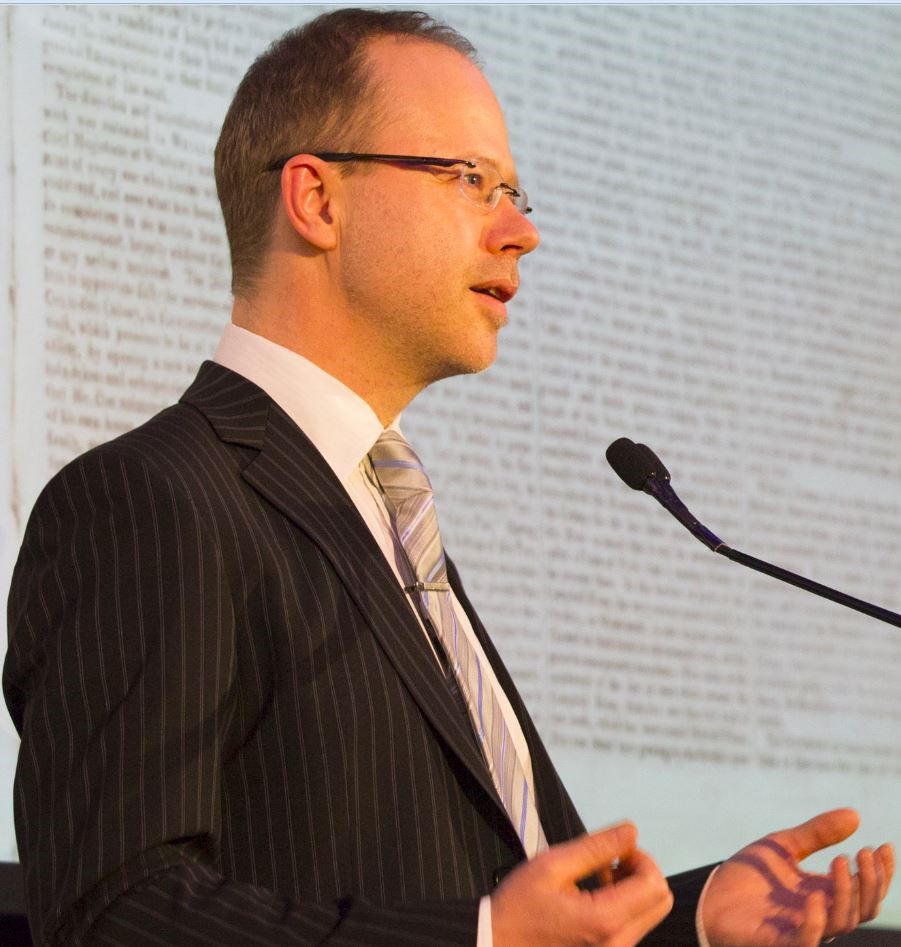
Paul Arthur is Vice-Chancellor’s Professorial Research Fellow, and Professor of Digital Humanities and Social Sciences, at Edith Cowan University, Western Australia. He speaks and publishes widely on major challenges and changes facing 21st-century society, from the global impacts of technology on communication, culture and identity to migration and human rights. Paul Arthur has over 100 publications including 13 books, and has received A$10M in grant funding, individually and in collaboration. His latest book is Open Scholarship in the Humanities (Bloomsbury 2024, with Lydia Hearn). A Fellow of the Royal Historical Society, he has held visiting positions in Europe, Asia-Pacific and North America, and given more than 50 keynote and plenary talks in 20 countries. Click here for full Profilesearch
recent
- Open Scholarship in the Humanities
- Border Crossings: Essays in Identity and Belonging
- Migration Experiences: Acknowledging the Past, and Sustaining the Present and Future
- Migrating People, Migrating Data: Digital Approaches to Migrant Heritage
- Migrant Nation
- Engaging Collections and Communities: Technology and Interactivity in Museums
- Digital Postmodernism and Postcolonialism
- Things Fall Apart: Identity in the Digital World
- Data Portraits: Identity, Privacy, and Surveillance
- Coda: Data Generation
Tag Cloud
18th Century Antipodes Australia Biography Cartography Collaboration Commemoration Communication Community Cross-Cultural Cultural Data Digital e-Research Exhibitions Experimental Fiction Genre Globalisation Heritage History Humanities Identity Informatics Infrastructure Interactive Interface Internet Life Writing Media Memory Mythology Narrative Networks Online Oral History Pacific Representation Storytelling Technology Textuality Theory Trauma Travel WarArchives
- November 2024 (1)
- June 2019 (1)
- December 2018 (1)
- November 2018 (1)
- April 2018 (1)
- March 2018 (1)
- January 2018 (1)
- October 2017 (1)
- April 2017 (1)
- September 2015 (1)
- May 2015 (2)
- November 2014 (2)
- October 2014 (2)
- September 2014 (2)
- August 2014 (1)
- March 2013 (1)
- December 2012 (1)
- February 2012 (2)
- November 2011 (2)
- April 2011 (3)
- February 2011 (1)
- December 2010 (2)
- November 2010 (1)
- April 2010 (1)
- July 2009 (1)
- March 2009 (1)
- February 2009 (1)
- January 2009 (1)
- October 2008 (1)
- September 2008 (1)
- August 2008 (1)
- May 2008 (1)
- April 2008 (1)
- March 2008 (1)
- January 2008 (1)
- August 2007 (1)
- January 2007 (1)
- November 2006 (1)
- July 2006 (1)
- October 2005 (1)
Categories
- 18th Century (3)
- Biography (12)
- Communication and Media Studies (23)
- Cultural Studies (38)
- Digital Scholarship (19)
- e-Research (12)
- Historical Studies (21)
- History (2)
- Humanities (22)
- Life Writing (23)
- Literary Studies (9)
- Museum Studies (3)
- Postcolonial Studies (6)
- Travel Writing (1)
feeds

Follow Paul



gmail [dot] com