The Archives
-
Communication and Media Studies, Digital Scholarship, Literary Studies, Postcolonial Studies
Digital Postmodernism and Postcolonialism
05.01.18 | Permalink | Comments Off on Digital Postmodernism and PostcolonialismDigital interactivity has triggered a transformation whose impact is greater than that of any other innovation in the history of technologies of communication. According to a 2016 Ericsson Mobility Report, over 90% of the world’s population will be covered by mobile broadband networks by 2021. “The world has been redrawn,” claims the Internet critic Andrew Keen, “as a distributed network.” It is becoming evident that we too are being redrawn as human beings, as individuals, and as citizens. At the heart of the change from analogue and print to digital is the capacity for connectedness that information technology brings – connectedness of information in and between databases, between experts and the public, between communities across the world, and between the arts and the sciences.
-
Biography, Communication and Media Studies, Cultural Studies, Life Writing
Coda: Data Generation
20.09.15 | Permalink | Comments Off on Coda: Data GenerationAuto/biography is just one of many disciplines that have been deeply influenced by advances in digital media and computing, and that have required new theoretical approaches to help understand the changes. As I have argued elsewhere, however, it may be that the digital revolution has had a more profound effect on biography and life writing than on any other branch of literature, perhaps any branch of the arts. In the 1990s, personal web pages and chatrooms offered new modalities for public and private expression that greatly facilitated life writing; this was a transformational period, opening up possibilities that have been multiplying ever since. In today’s era of ubiquitous computing and an increasingly data-driven global society, the Web has evolved to be an interface to a deeper layer of stores and flows of data that can be made manifest in many ways, in different views, and on any number of devices.
-
Cultural Studies, History, Life Writing
Reclaiming the Past: Nadia’s Story
27.08.14 | Permalink | Comments Off on Reclaiming the Past: Nadia’s StoryMy Ukrainian grandparents Nadia and Petro Olijnyk arrived in Australia as postwar refugees in 1949. Petro died in 2005 and Nadia in 2009, each in their mid-90s. My grandfather loved telling stories and holding an audience. Nadia would sit with him, listening, but Petro would never allow her to take over. However, when he wasn’t with her she would sometimes tell her own stories and I was struck by how different they were from his. This paper focuses not on Nadia’s storytelling but her story writing, something she began to do in her late 80s for the first time in her life.
-
Cultural Studies, Digital Scholarship, Historical Studies
Gallipoli Online
07.12.10 | Permalink | Comments Off on Gallipoli OnlineAt the heart of the national narrative in Australia is the potent and enduring story of the Australian and New Zealand soldiers—the ANZACs—who fought at Gallipoli, in Turkey, in the First World War, against impossible odds. It is a story that has taken on legendary significance. Each year, on the anniversary of the catastrophic Gallipoli conflict of 25 April 1915, there is a national holiday and Australians in ever-increasing numbers attend Anzac dawn services—conducted at memorials across the nation—to honour the dead of this and later wars. The role of the Gallipoli: The First Day website is not only to repeat and reinforce the Anzac message and make it more accessible, but also to offer a new assemblage of information utilising the 3D visual power of the digital environment.
-
Communication and Media Studies, Cultural Studies, Literary Studies
Digital Fabric, Narrative Threads
25.10.08 | Permalink | Comments Off on Digital Fabric, Narrative ThreadsThe traditional crafts of quilting, embroidering and weaving may appear to be a world away from the high tech fields of computer networking, digital interface design, and database development. However, the old and new are increasingly being linked through metaphors that reveal a great deal about changing attitudes to digital technologies as they become more established and widely accessible […] Today’s communication networks are structured around “patchwork” designs, software glitches are fixed with “patches,” computer processors are being described as “multi-threaded,” and over the past decade other “material metaphors” have been embraced as a means of conceptualising and giving form to our new world of amorphous digital texts. In particular, the quilt motif has been used in a variety of ways, including as a means of visualising interaction and information flows and as a template for digital interface design.
-
Communication and Media Studies, Cultural Studies, e-Research, Humanities
Multimedia and the Narrative Frame
25.07.06 | Permalink | Comments Off on Multimedia and the Narrative FrameJanet Murray’s Hamlet on the Holodeck (1997), a landmark text written nearly a decade ago, set out to investigate the potential for interactive story forms at a time when digital interactivity was, for the first time, in the hands of the mainstream. Her book, which analyses a range of non-linear narrative models, continues to inspire those who wish to imagine the future of digital narrative textuality. The study of interactive narrative is now a vast field in its own right. Today there is extensive, vibrant debate on the evolution of digital narrative story forms, with theoretical commentary coming from perspectives as diverse as new media theory, literary studies, cinema studies, media arts and humanities computing.
about
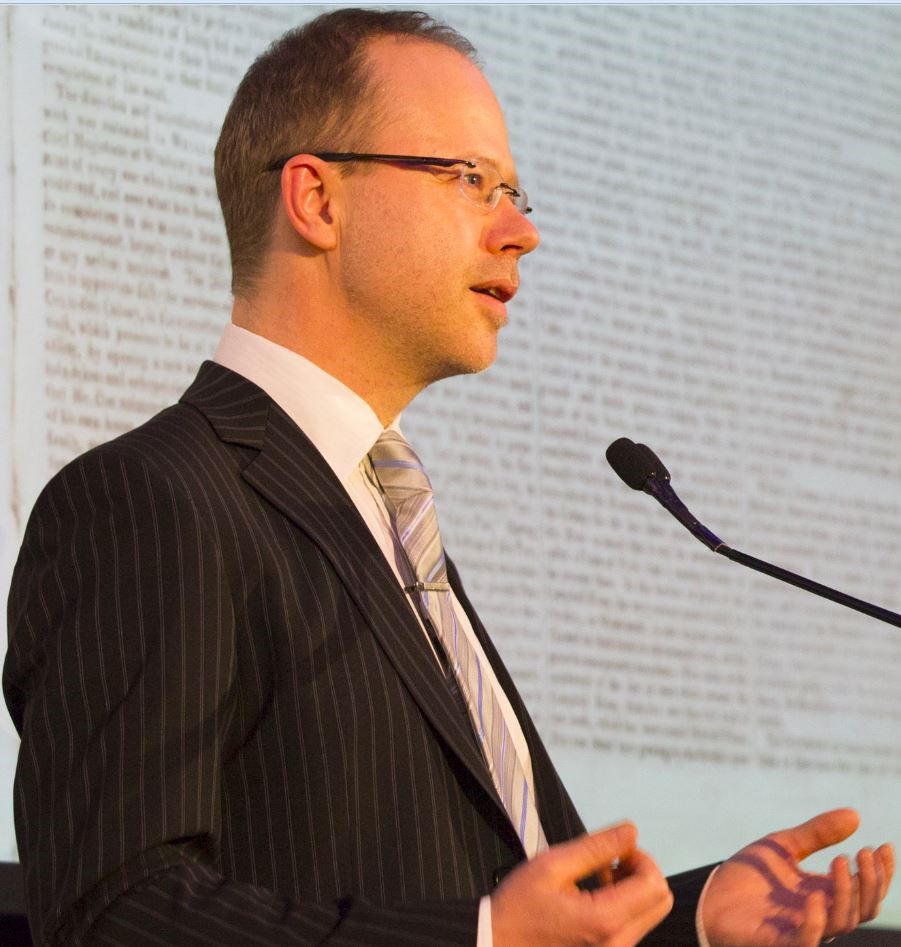
Paul Arthur is Vice-Chancellor’s Professorial Research Fellow, and Professor of Digital Humanities and Social Sciences, at Edith Cowan University, Western Australia. He speaks and publishes widely on major challenges and changes facing 21st-century society, from the global impacts of technology on communication, culture and identity to migration and human rights. Paul Arthur has over 100 publications including 13 books, and has received A$10M in grant funding, individually and in collaboration. His latest book is Open Scholarship in the Humanities (Bloomsbury 2024, with Lydia Hearn). A Fellow of the Royal Historical Society, he has held visiting positions in Europe, Asia-Pacific and North America, and given more than 50 keynote and plenary talks in 20 countries. Click here for full Profilesearch
recent
- Open Scholarship in the Humanities
- Border Crossings: Essays in Identity and Belonging
- Migration Experiences: Acknowledging the Past, and Sustaining the Present and Future
- Migrating People, Migrating Data: Digital Approaches to Migrant Heritage
- Migrant Nation
- Engaging Collections and Communities: Technology and Interactivity in Museums
- Digital Postmodernism and Postcolonialism
- Things Fall Apart: Identity in the Digital World
- Data Portraits: Identity, Privacy, and Surveillance
- Coda: Data Generation
Tag Cloud
18th Century Antipodes Australia Biography Cartography Collaboration Commemoration Communication Community Cross-Cultural Cultural Data Digital e-Research Exhibitions Experimental Fiction Genre Globalisation Heritage History Humanities Identity Informatics Infrastructure Interactive Interface Internet Life Writing Media Memory Mythology Narrative Networks Online Oral History Pacific Representation Storytelling Technology Textuality Theory Trauma Travel WarArchives
- November 2024 (1)
- June 2019 (1)
- December 2018 (1)
- November 2018 (1)
- April 2018 (1)
- March 2018 (1)
- January 2018 (1)
- October 2017 (1)
- April 2017 (1)
- September 2015 (1)
- May 2015 (2)
- November 2014 (2)
- October 2014 (2)
- September 2014 (2)
- August 2014 (1)
- March 2013 (1)
- December 2012 (1)
- February 2012 (2)
- November 2011 (2)
- April 2011 (3)
- February 2011 (1)
- December 2010 (2)
- November 2010 (1)
- April 2010 (1)
- July 2009 (1)
- March 2009 (1)
- February 2009 (1)
- January 2009 (1)
- October 2008 (1)
- September 2008 (1)
- August 2008 (1)
- May 2008 (1)
- April 2008 (1)
- March 2008 (1)
- January 2008 (1)
- August 2007 (1)
- January 2007 (1)
- November 2006 (1)
- July 2006 (1)
- October 2005 (1)
Categories
- 18th Century (3)
- Biography (12)
- Communication and Media Studies (23)
- Cultural Studies (38)
- Digital Scholarship (19)
- e-Research (12)
- Historical Studies (21)
- History (2)
- Humanities (22)
- Life Writing (23)
- Literary Studies (9)
- Museum Studies (3)
- Postcolonial Studies (6)
- Travel Writing (1)
feeds

Follow Paul



gmail [dot] com