The Archives
-
Communication and Media Studies, Digital Scholarship, Humanities
Open Scholarship in the Humanities
15.11.24 | Permalink | Comments Off on Open Scholarship in the HumanitiesExploring the rise of open scholarship in the digital era and its transformational impact on how knowledge is created, shared, and accessed, this open access book offers new insights on the history, development, and future directions of openness in the humanities and identifies key drivers, opportunities, and challenges. The concept of open research is reconfiguring […]
-
Biography, Communication and Media Studies, Cultural Studies, Life Writing
Coda: Data Generation
20.09.15 | Permalink | Comments Off on Coda: Data GenerationAuto/biography is just one of many disciplines that have been deeply influenced by advances in digital media and computing, and that have required new theoretical approaches to help understand the changes. As I have argued elsewhere, however, it may be that the digital revolution has had a more profound effect on biography and life writing than on any other branch of literature, perhaps any branch of the arts. In the 1990s, personal web pages and chatrooms offered new modalities for public and private expression that greatly facilitated life writing; this was a transformational period, opening up possibilities that have been multiplying ever since. In today’s era of ubiquitous computing and an increasingly data-driven global society, the Web has evolved to be an interface to a deeper layer of stores and flows of data that can be made manifest in many ways, in different views, and on any number of devices.
-
Communication and Media Studies, Digital Scholarship, e-Research, Humanities
Advancing Digital Humanities
05.11.14 | Permalink | Comments Off on Advancing Digital HumanitiesAdvancing Digital Humanities moves beyond definition of this dynamic and fast growing field to show how its arguments, analyses, findings and theories are pioneering new directions in the humanities globally. Sections cover digital methods, critical curation and research futures, with theoretical and practical chapters framed around key areas of activity including modelling collections, data-driven analysis, and thinking through building. These are linked through the concept of ‘ambitious generosity’, a way of working to pursue large-scale research questions while supporting and enabling other research areas and approaches, both within and beyond the academy.
-
Cultural Studies, Digital Scholarship, e-Research, Humanities
Launch of HuNI Virtual Laboratory for Australian Cultural Data
01.11.14 | Permalink | Comments Off on Launch of HuNI Virtual Laboratory for Australian Cultural DataThe Humanities Networked Infrastructure (HuNI) is a national Virtual Laboratory project developed as part of the Australian government’s NeCTAR (National e-Research Collaboration Tools and Resources) program. HuNI combines information from 30 of Australia’s most significant cultural datasets. These datasets comprise more than 2 million authoritative records relating to the people, organisations, objects and events that make up Australia’s rich cultural heritage. HuNI also enables researchers to work with and share this large-scale aggregation of cultural information. HuNI has been developed as a partnership between 13 public institutions, led by Deakin University. By providing researchers worldwide with access to the combined resources of Australia’s most important cultural datasets and information assets, HuNI is recognised as the first national, cross-disciplinary virtual laboratory of its kind to be established anywhere in the world.
-
Communication and Media Studies, Cultural Studies, e-Research, Historical Studies
Toward a Global Digital History
25.11.11 | Permalink | Comments Off on Toward a Global Digital HistoryDigital history spans disciplines and can take many forms. Computer technology started to revolutionize the study of history more than three decades ago, and yet genres and formats for recording and presenting history using digital media are not well established and we are only now starting to see large-scale benefits. New modes of publication, new methods for doing research, and new channels of communication are making historical research richer, more relevant, and globally accessible. Many applications of computer-based research and publication are natural extensions of the established techniques for researching and writing history. Others are consciously experimental. This chapter discusses the latest advances in the digital history field and explores how new media technologies are reconfiguring the study of the past.
-
Biography, Communication and Media Studies, Cultural Studies, Humanities, Life Writing, Literary Studies
Digital Biography
25.07.09 | Permalink | Comments Off on Digital BiographyThis paper reflects on an emerging field that has no accepted name or boundaries but is described here as “digital biography.” The activities, formats, and genres associated with this field are rarely linked with life writing or traditional biographical studies. Rather, this field is seen as the domain of those concerned with digital privacy, copyright, data preservation, and identity management. Over the past decade or so, critics in various disciplines, mainly legal studies, information management, multimedia design, and IT development, as well as sociology, psychology, and marketing, have focused on the complexity of online identity. Though online identity has become such a significant focus of attention in these disciplines, few who study biography have discussed it. Indeed, as Nigel Hamilton points out, biography itself has had less attention than one might expect for a field that “has enjoyed an extraordinary renaissance in recent years”, a field that, according to Carl Rollyson, is widely recognized as “the dominant non-fiction of our age”.
-
Communication and Media Studies, Cultural Studies, Humanities, Life Writing
Saving Lives: Digital Biography and Life Writing
25.02.09 | Permalink | Comments Off on Saving Lives: Digital Biography and Life WritingIn this first decade of the twenty-first century we are caught up in the midst of a technological shift of the kind that Walter Benjamin, in his 1936 essay ‘The Work of Art in the Age of Mechanical Reproduction’, attributed to the increasing popularity of photography in the early twentieth century. The essence of that change was the unprecedented capacity to create infinitely reproducible multiple copies. For the first time the idea of the primacy of the singular work of art was seriously open to question. ‘The history of every art form,’ writes Benjamin, ‘shows critical epochs in which a certain art form aspires to effects which could be fully obtained only with a changed technical standard, that is to say, a new art form’. Photography initiated a change that Benjamin recognised as being as profound in its impact on people’s lives as the introduction of the printing press.
-
Cultural Studies, Digital Scholarship, Historical Studies, Humanities, Museum Studies
Exhibiting History: The Digital Future
25.04.08 | Permalink | Comments Off on Exhibiting History: The Digital FutureThis paper surveys the digital history field, highlighting trends across historical, cultural and literary studies, heritage, archaeology and geography, as well as library information, screen and media studies, multimedia production and interaction design. This broad field is increasingly relevant to museum practice as museums experiment with digital modes of presentation and communication, including virtual exhibitions and other online extensions of the physical visitor experience.
-
Communication and Media Studies, e-Research, Historical Studies, Humanities
Participating in the Past
25.03.08 | Permalink | Comments Off on Participating in the PastThe profile of oral history research has grown dramatically over the past two decades. One of the reasons for this is that there has been a diversification of modes of public access and delivery. The increasing use of digital media means that oral histories are now reaching far greater audiences, and these histories are being presented in more direct, more stimulating and richer ways than have before been possible. In fact, the digital revolution is rapidly transforming history as a genre and set of practices, and oral history is a key player in this process. Because oral histories lend themselves to digital forms of delivery much more readily than conventional, text-only, representations of history, oral history has come to be a central focus for digital history researchers.
-
Communication and Media Studies, Cultural Studies, e-Research, Humanities, Life Writing
Digital Lives
25.01.08 | Permalink | Comments Off on Digital LivesThe aim of the Interactive Histories research program is to seek ways of using interactive media for experimental content delivery in projects with a broadly historical focus. The focus to date has been on oral history projects (including virtual tours of heritage sites, museum installations and multimedia documentaries) and on theoretical research investigating emerging frameworks for historical representation enabled by interactive technologies. Planned projects include digital storytelling in local communities and the development of Indigenous and cross-cultural digital resources. Central to the two projects being presented here is the production of multimedia works designed to maximize public access to oral history material.
about
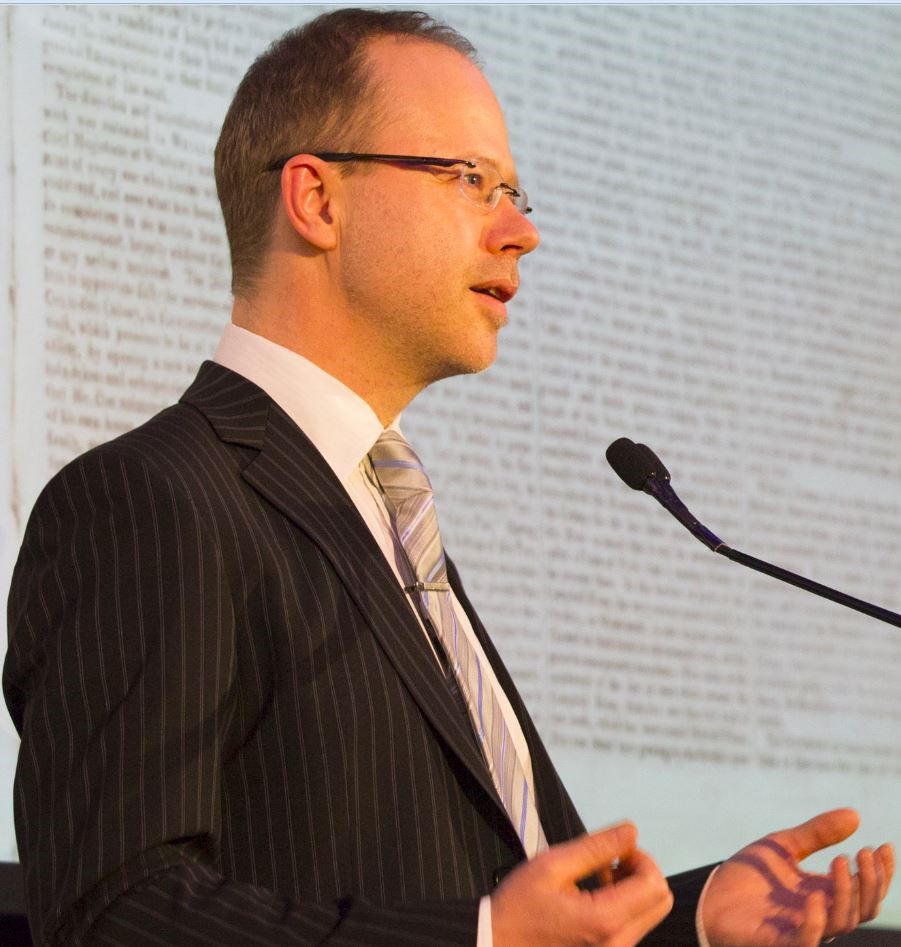
Paul Arthur is Vice-Chancellor’s Professorial Research Fellow, and Professor of Digital Humanities and Social Sciences, at Edith Cowan University, Western Australia. He speaks and publishes widely on major challenges and changes facing 21st-century society, from the global impacts of technology on communication, culture and identity to migration and human rights. Paul Arthur has over 100 publications including 13 books, and has received A$10M in grant funding, individually and in collaboration. His latest book is Open Scholarship in the Humanities (Bloomsbury 2024, with Lydia Hearn). A Fellow of the Royal Historical Society, he has held visiting positions in Europe, Asia-Pacific and North America, and given more than 50 keynote and plenary talks in 20 countries. Click here for full Profilesearch
recent
- Open Scholarship in the Humanities
- Border Crossings: Essays in Identity and Belonging
- Migration Experiences: Acknowledging the Past, and Sustaining the Present and Future
- Migrating People, Migrating Data: Digital Approaches to Migrant Heritage
- Migrant Nation
- Engaging Collections and Communities: Technology and Interactivity in Museums
- Digital Postmodernism and Postcolonialism
- Things Fall Apart: Identity in the Digital World
- Data Portraits: Identity, Privacy, and Surveillance
- Coda: Data Generation
Tag Cloud
18th Century Antipodes Australia Biography Cartography Collaboration Commemoration Communication Community Cross-Cultural Cultural Data Digital e-Research Exhibitions Experimental Fiction Genre Globalisation Heritage History Humanities Identity Informatics Infrastructure Interactive Interface Internet Life Writing Media Memory Mythology Narrative Networks Online Oral History Pacific Representation Storytelling Technology Textuality Theory Trauma Travel WarArchives
- November 2024 (1)
- June 2019 (1)
- December 2018 (1)
- November 2018 (1)
- April 2018 (1)
- March 2018 (1)
- January 2018 (1)
- October 2017 (1)
- April 2017 (1)
- September 2015 (1)
- May 2015 (2)
- November 2014 (2)
- October 2014 (2)
- September 2014 (2)
- August 2014 (1)
- March 2013 (1)
- December 2012 (1)
- February 2012 (2)
- November 2011 (2)
- April 2011 (3)
- February 2011 (1)
- December 2010 (2)
- November 2010 (1)
- April 2010 (1)
- July 2009 (1)
- March 2009 (1)
- February 2009 (1)
- January 2009 (1)
- October 2008 (1)
- September 2008 (1)
- August 2008 (1)
- May 2008 (1)
- April 2008 (1)
- March 2008 (1)
- January 2008 (1)
- August 2007 (1)
- January 2007 (1)
- November 2006 (1)
- July 2006 (1)
- October 2005 (1)
Categories
- 18th Century (3)
- Biography (12)
- Communication and Media Studies (23)
- Cultural Studies (38)
- Digital Scholarship (19)
- e-Research (12)
- Historical Studies (21)
- History (2)
- Humanities (22)
- Life Writing (23)
- Literary Studies (9)
- Museum Studies (3)
- Postcolonial Studies (6)
- Travel Writing (1)
feeds

Follow Paul



gmail [dot] com