The Archives
-
Biography, Cultural Studies, Historical Studies, Humanities, Life Writing
Migrating People, Migrating Data: Digital Approaches to Migrant Heritage
09.11.18 | Permalink | Comments Off on Migrating People, Migrating Data: Digital Approaches to Migrant HeritageGlobal migration is one of the defining characteristics of the twentieth and early twenty-first centuries. Migrants all over the world have left multiple traces in different countries, and this cultural heritage is of growing interest to researchers and to the migrant communities themselves. Cultural heritage institutions, however, have dwindling funds and resources to meet the demand for the heritage of immigrant communities to be protected.
In this article we propose that the key to bridging this gap is to be found in new possibilities that are opened up if resources are linked to enable digital exploration of archival records and collections. In particular, we focus on the value of building a composite and distributed resource around migrants’ life courses. If this approach is used and dispersed collections held by heritage institutions can be linked, migrant communities can have access to detailed information about their families and researchers to a wealth of data—serial and qualitative—for sophisticated and innovative research. Not only does the scattered data become more usable and manageable, it becomes more visible and coherent; patterns can be discovered that were not apparent before. We use the Dutch-Australian collaborative project “Migrant: Mobilities and Connection” as an example and case study of this life course–centered methodology and propose that this may develop into a migration heritage template for migrants worldwide.
-
Biography, Cultural Studies, Life Writing, Literary Studies
Private Lives, Intimate Readings
08.05.15 | Permalink | Comments Off on Private Lives, Intimate ReadingsIn any attempt to report on the life of another, or even one’s own life, an inescapable ethical dilemma arises that relates to entering intensely private areas of experience and presenting intimate subject matter for the world to see. How much intimate material should be revealed? For what purpose? To whose benefit? At what risk? How?
In an era when millions of people are willing to share the minutiae of their individual daily lives via social media and the private lives of the famous are exposed routinely to mass audiences, such questions loom larger than ever. With easier access to private information—by governments, hackers, marketers, and private citizens—this area has become one of global concern in the context of the fundamental human right to privacy. Critical engagement with the private and the intimate has always been a key characteristic of life-writing studies, and this field has made a noteworthy contribution to contemporary reconceptualisations of the private and the public spheres and the intricate interconnections between them.
-
Communication and Media Studies, Cultural Studies, e-Research, Historical Studies
Toward a Global Digital History
25.11.11 | Permalink | Comments Off on Toward a Global Digital HistoryDigital history spans disciplines and can take many forms. Computer technology started to revolutionize the study of history more than three decades ago, and yet genres and formats for recording and presenting history using digital media are not well established and we are only now starting to see large-scale benefits. New modes of publication, new methods for doing research, and new channels of communication are making historical research richer, more relevant, and globally accessible. Many applications of computer-based research and publication are natural extensions of the established techniques for researching and writing history. Others are consciously experimental. This chapter discusses the latest advances in the digital history field and explores how new media technologies are reconfiguring the study of the past.
-
Communication and Media Studies, Cultural Studies, e-Research, Humanities
eResearch Infrastructure for the Humanities, Arts and Social Sciences
29.04.11 | Permalink | Comments Off on eResearch Infrastructure for the Humanities, Arts and Social SciencesAustralian researchers are recognised internationally for delivering solutions to the most complex and challenging questions facing cultures and communities. Their contributions are vital to the nation’s social wellbeing. Encompassing the study of society, identity, economy, business, governance, history, culture and creativity, this broad field links universities, government agencies, collecting institutions and creative industries with policy development and with communities. However, complex issues of national and global significance cannot be solved in isolation. They demand collaborative approaches which in turn require the infrastructure to support them. Across all sectors, research practices are being fundamentally influenced by leading-edge ICT, and social and cultural data of immense significance is being generated in many different forms. With considerable investment worldwide in eResearch infrastructure, innovation in the humanities, arts and social sciences is increasingly dependent on enabling technology to support research excellence.
-
Cultural Studies, Historical Studies, Life Writing
Lives Recovered and Reclaimed
25.04.11 | Permalink | Comments Off on Lives Recovered and ReclaimedA life can be recovered in many ways: through retrieving, reclaiming, remembering, re-imagining, revising, restoring, recognising, re-telling or re-placing. In this special issue of Life Writing the impulse to pay respect to lost, hidden or unacknowledged lives flows through the papers, all of which are drawn from the major international conference on ‘Recovering Lives’ convened by Cassandra Pybus, Caroline Turner and Paul Arthur in 2008, and hosted by the Humanities Research Centre at the Australian National University. With sessions held at the National Museum of Australia, accompanying exhibitions, artists’ talks and film screenings, the conference aimed to break down traditional barriers between disciplines, media and ways of seeing. Historians, writers, filmmakers, anthropologists, curators, journalists, artists and activists interpreted the theme in ways that put the spotlight on people and practices that the global vision, for all its benefits, has left behind, overlooked, marginalised, or even enslaved.
-
Communication and Media Studies, Digital Scholarship, e-Research, Humanities
Virtual Strangers: e-Research and the Humanities
25.01.09 | Permalink | Comments Off on Virtual Strangers: e-Research and the HumanitiesThe Arts and Humanities have traditionally been worlds apart from Science and Technology in their ways of pursuing and generating knowledge and understanding. So much so that the famous term, ‘The Two Cultures’, coined in the mid twentieth century by C. P. Snow to describe the vast gap between these discipline areas, is still current and relevant.[i] It continues to dominate the organisation of disciplines in universities and drive the distribution of most national research funding. However, quite suddenly, at the end of the twentieth century, the digital environment began to trigger major changes in the knowledge economy, with the result that the humanities were thrown unexpectedly and involuntarily into a close relationship with technology. As one might expect in any forced marriage, it was not a case of love at first sight. In fact, the humanities have exhibited the full range of reactions—from totally ignoring the other, through unashamedly raiding their wealth, to wholeheartedly embracing the exciting future they seem to offer. Whatever the reaction, it is clear that the humanities are now inescapably entangled with technology, for better or worse, and the two cultures are connecting more than ever before, notably in the new research activities and spaces signalled by the term ‘e-research’.
about
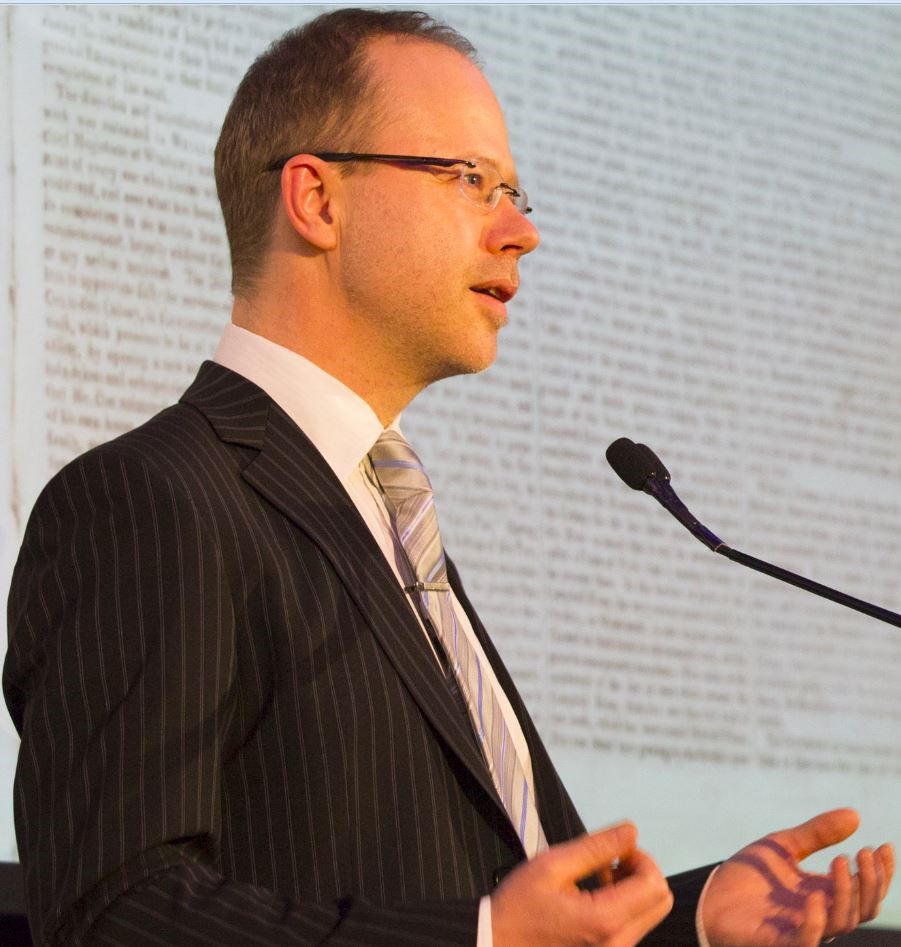
Paul Arthur is Vice-Chancellor’s Professorial Research Fellow, and Professor of Digital Humanities and Social Sciences, at Edith Cowan University, Western Australia. He speaks and publishes widely on major challenges and changes facing 21st-century society, from the global impacts of technology on communication, culture and identity to migration and human rights. Paul Arthur has over 100 publications including 13 books, and has received A$10M in grant funding, individually and in collaboration. His latest book is Open Scholarship in the Humanities (Bloomsbury 2024, with Lydia Hearn). A Fellow of the Royal Historical Society, he has held visiting positions in Europe, Asia-Pacific and North America, and given more than 50 keynote and plenary talks in 20 countries. Click here for full Profilesearch
recent
- Open Scholarship in the Humanities
- Border Crossings: Essays in Identity and Belonging
- Migration Experiences: Acknowledging the Past, and Sustaining the Present and Future
- Migrating People, Migrating Data: Digital Approaches to Migrant Heritage
- Migrant Nation
- Engaging Collections and Communities: Technology and Interactivity in Museums
- Digital Postmodernism and Postcolonialism
- Things Fall Apart: Identity in the Digital World
- Data Portraits: Identity, Privacy, and Surveillance
- Coda: Data Generation
Tag Cloud
18th Century Antipodes Australia Biography Cartography Collaboration Commemoration Communication Community Cross-Cultural Cultural Data Digital e-Research Exhibitions Experimental Fiction Genre Globalisation Heritage History Humanities Identity Informatics Infrastructure Interactive Interface Internet Life Writing Media Memory Mythology Narrative Networks Online Oral History Pacific Representation Storytelling Technology Textuality Theory Trauma Travel WarArchives
- November 2024 (1)
- June 2019 (1)
- December 2018 (1)
- November 2018 (1)
- April 2018 (1)
- March 2018 (1)
- January 2018 (1)
- October 2017 (1)
- April 2017 (1)
- September 2015 (1)
- May 2015 (2)
- November 2014 (2)
- October 2014 (2)
- September 2014 (2)
- August 2014 (1)
- March 2013 (1)
- December 2012 (1)
- February 2012 (2)
- November 2011 (2)
- April 2011 (3)
- February 2011 (1)
- December 2010 (2)
- November 2010 (1)
- April 2010 (1)
- July 2009 (1)
- March 2009 (1)
- February 2009 (1)
- January 2009 (1)
- October 2008 (1)
- September 2008 (1)
- August 2008 (1)
- May 2008 (1)
- April 2008 (1)
- March 2008 (1)
- January 2008 (1)
- August 2007 (1)
- January 2007 (1)
- November 2006 (1)
- July 2006 (1)
- October 2005 (1)
Categories
- 18th Century (3)
- Biography (12)
- Communication and Media Studies (23)
- Cultural Studies (38)
- Digital Scholarship (19)
- e-Research (12)
- Historical Studies (21)
- History (2)
- Humanities (22)
- Life Writing (23)
- Literary Studies (9)
- Museum Studies (3)
- Postcolonial Studies (6)
- Travel Writing (1)
feeds

Follow Paul



gmail [dot] com