The Archives
-
Biography, Cultural Studies, Life Writing
Border Crossings: Essays in Identity and Belonging
09.06.19 | Permalink | Comments Off on Border Crossings: Essays in Identity and BelongingThe border between intimate memory and historical revelation is explored in this wide-ranging collection, which features original contributions from leading figures in the life-writing field from Australia, Canada, Europe, the UK, and the USA.
https://www.routledge.com/Border-Crossings-Essays-in-Identity-and-Belonging-1st-Edition/Arthur-Kurvet-Kaosaar/p/book/9781138671096
-
Biography, Communication and Media Studies, Cultural Studies, Life Writing
Coda: Data Generation
20.09.15 | Permalink | Comments Off on Coda: Data GenerationAuto/biography is just one of many disciplines that have been deeply influenced by advances in digital media and computing, and that have required new theoretical approaches to help understand the changes. As I have argued elsewhere, however, it may be that the digital revolution has had a more profound effect on biography and life writing than on any other branch of literature, perhaps any branch of the arts. In the 1990s, personal web pages and chatrooms offered new modalities for public and private expression that greatly facilitated life writing; this was a transformational period, opening up possibilities that have been multiplying ever since. In today’s era of ubiquitous computing and an increasingly data-driven global society, the Web has evolved to be an interface to a deeper layer of stores and flows of data that can be made manifest in many ways, in different views, and on any number of devices.
-
Cultural Studies, History, Life Writing
Material Memory and the Digital
19.05.15 | Permalink | Comments Off on Material Memory and the DigitalOver the past two decades, memory, understood as both the act of remembering and a means of storing memories, has been relocating itself. In its daily usage it has been moving from the mind to the computer—from neurological systems to digital technologies—as people increasingly outsource memory to digital devices. In this essay I focus on the changing nature of remembering—and forgetting—in the digital era. With an emphasis on personal stories I ask: How is intergenerational memory transfer changing as a result of digital media technologies? Specifically, what are the implications of the shift to digital storage and communication processes for the way we retain, pass on, or receive private and intimate material? How has this changed the way we see ourselves and view our lives, and allow others to see ourselves and our lives?
-
Biography, Cultural Studies, Life Writing, Literary Studies
Private Lives, Intimate Readings
08.05.15 | Permalink | Comments Off on Private Lives, Intimate ReadingsIn any attempt to report on the life of another, or even one’s own life, an inescapable ethical dilemma arises that relates to entering intensely private areas of experience and presenting intimate subject matter for the world to see. How much intimate material should be revealed? For what purpose? To whose benefit? At what risk? How?
In an era when millions of people are willing to share the minutiae of their individual daily lives via social media and the private lives of the famous are exposed routinely to mass audiences, such questions loom larger than ever. With easier access to private information—by governments, hackers, marketers, and private citizens—this area has become one of global concern in the context of the fundamental human right to privacy. Critical engagement with the private and the intimate has always been a key characteristic of life-writing studies, and this field has made a noteworthy contribution to contemporary reconceptualisations of the private and the public spheres and the intricate interconnections between them.
-
Cultural Studies, History, Life Writing
Reclaiming the Past: Nadia’s Story
27.08.14 | Permalink | Comments Off on Reclaiming the Past: Nadia’s StoryMy Ukrainian grandparents Nadia and Petro Olijnyk arrived in Australia as postwar refugees in 1949. Petro died in 2005 and Nadia in 2009, each in their mid-90s. My grandfather loved telling stories and holding an audience. Nadia would sit with him, listening, but Petro would never allow her to take over. However, when he wasn’t with her she would sometimes tell her own stories and I was struck by how different they were from his. This paper focuses not on Nadia’s storytelling but her story writing, something she began to do in her late 80s for the first time in her life.
-
Cultural Studies, Historical Studies, Life Writing
Voices from the West End
06.02.12 | Permalink | Comments Off on Voices from the West EndOn a triangle of land that points out to sea at the mouth of the Swan River is Fremantle’s heritage district, the West End, renowned for its colonial architecture that includes the largest collection of heritage-listed buildings in Western Australia and its oldest public building, the Round House gaol (1831). Although Fremantle has often been threatened by the demands of redevelopment, today it is recognised as one of the world’s best preserved examples of a nineteenth-century port city and colonial townscape. ‘Freo’, as it is known locally, also has an exceptionally diverse multicultural community, lending a special character that is the legacy of its role as a historical gateway to Australia, the first point of contact for generations of migrants and visitors arriving by sea from Europe. This mix of cultures and traditions has shaped the life of the cosmopolitan city, which now has a population of close to 30,000.
-
Cultural Studies, Historical Studies, Life Writing
Lives Recovered and Reclaimed
25.04.11 | Permalink | Comments Off on Lives Recovered and ReclaimedA life can be recovered in many ways: through retrieving, reclaiming, remembering, re-imagining, revising, restoring, recognising, re-telling or re-placing. In this special issue of Life Writing the impulse to pay respect to lost, hidden or unacknowledged lives flows through the papers, all of which are drawn from the major international conference on ‘Recovering Lives’ convened by Cassandra Pybus, Caroline Turner and Paul Arthur in 2008, and hosted by the Humanities Research Centre at the Australian National University. With sessions held at the National Museum of Australia, accompanying exhibitions, artists’ talks and film screenings, the conference aimed to break down traditional barriers between disciplines, media and ways of seeing. Historians, writers, filmmakers, anthropologists, curators, journalists, artists and activists interpreted the theme in ways that put the spotlight on people and practices that the global vision, for all its benefits, has left behind, overlooked, marginalised, or even enslaved.
-
Cultural Studies, Historical Studies, Life Writing, Literary Studies
Unearthing the Past
20.04.11 | Permalink | Comments Off on Unearthing the PastWhen Hitler’s troops invaded and occupied the city of Kharkov in Ukraine, my grandparents Nadia, 26, and Petro, 30, had two young children, aged 7 and 5. My mother had not yet been born. In this tense and uncertain period it was unclear whether Ukraine would ultimately be controlled by Stalin or Hitler. There was nothing to recommend one over the other, they often said. Both regimes were brutal and both targeted Ukrainians. Mid-1943 marked a turning point—the end of their lives in Ukraine and the first stage of a journey into the unknown that led to their eventual arrival in Australia in 1949 as post-war refugees. They were packed into railway goods wagons with other Ukrainians and were taken from Kharkov, where they had built their world, to Dwikozy in Poland. This was the place of their first displacement from everything that made up their history and identity—homeland, language, culture, family, community, and career. Like many other refugees my grandparents attempted to compensate for the loss of their past by trying to recover it repeatedly years later in the stories that they told.
-
Cultural Studies, Historical Studies, Humanities, Life Writing
Trauma Online
25.03.09 | Permalink | Comments Off on Trauma OnlineThis article considers how traditional physical memorials to war and other catastrophic events differ from online memorials in the Web 2.0 environment and it asks what the benefits and drawbacks of each may be. There has always been an awkward fit between the public statements embodied in monuments to those who died in war and the personal stories told by individuals who returned. This disjuncture serves to demonstrate that the two ways of remembering traumatic events—the collective and the individual—have traditionally been poles apart and often contradictory. Gradually, over the past two decades, with the increasing influence of critical theories that have questioned national and other dominating discourses—and also with growing interest within the field of clinical psychology in what is now labeled post-traumatic stress disorder—there has been an increasing interest in the vast underlayer of personal stories that national narratives have shut out or silenced.
-
Communication and Media Studies, Cultural Studies, e-Research, Life Writing
Pixelated Memory
25.05.08 | Permalink | Comments Off on Pixelated MemoryWar memorials are the most familiar and visible means of acknowledging and respecting the trauma of large scale, violent conflict. In practically every town in Australia, however small, monuments to war are found. These are haunting, poignant reminders of the brutality of war and the fragility of life. And yet, their reassuring solidity and prominence shields us from the reality of lost lives and suffering by casting war in terms of abstract and stylised notions of heroism, loyalty, sacrifice and glory. While it is usual for the names of the dead to be listed on these monuments, their individual suffering is blended, ritualised and distanced in a symbolic and generalised tribute. It is not surprising then that there has always been an awkward fit between the public statements made by these monuments and the personal stories told by individuals who returned.
about
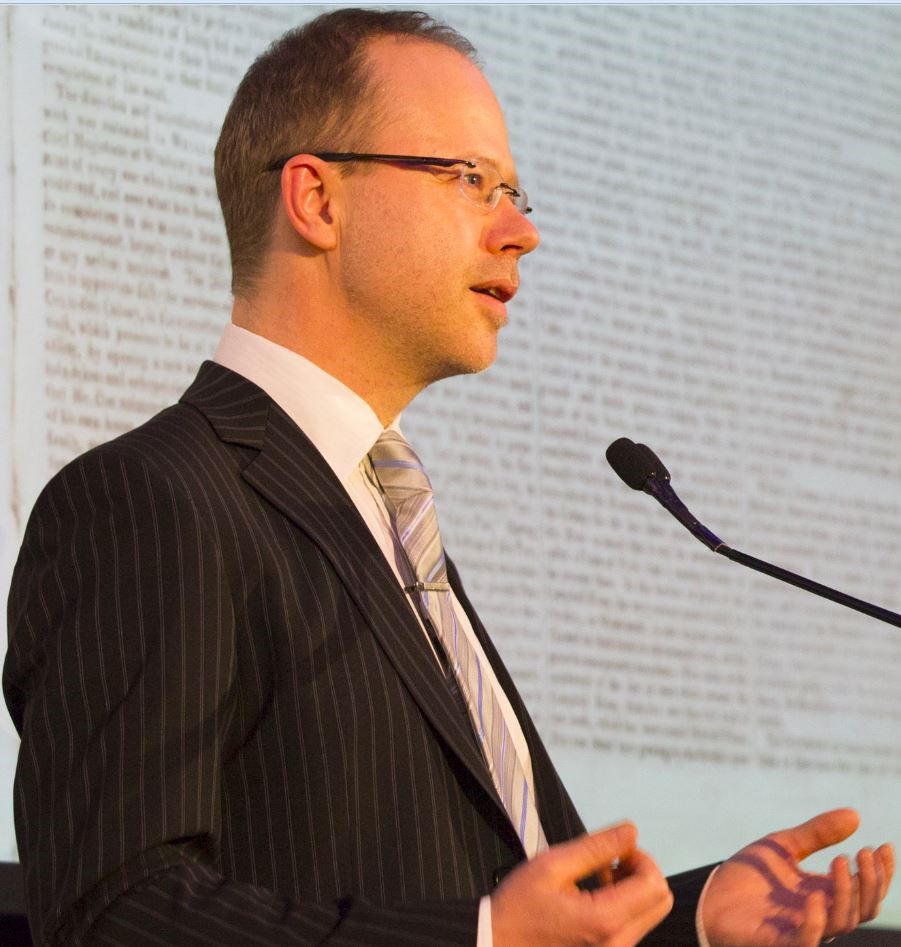
Paul Arthur is Vice-Chancellor’s Professorial Research Fellow, and Professor of Digital Humanities and Social Sciences, at Edith Cowan University, Western Australia. He speaks and publishes widely on major challenges and changes facing 21st-century society, from the global impacts of technology on communication, culture and identity to migration and human rights. Paul Arthur has over 100 publications including 13 books, and has received A$10M in grant funding, individually and in collaboration. His latest book is Open Scholarship in the Humanities (Bloomsbury 2024, with Lydia Hearn). A Fellow of the Royal Historical Society, he has held visiting positions in Europe, Asia-Pacific and North America, and given more than 50 keynote and plenary talks in 20 countries. Click here for full Profilesearch
recent
- Open Scholarship in the Humanities
- Border Crossings: Essays in Identity and Belonging
- Migration Experiences: Acknowledging the Past, and Sustaining the Present and Future
- Migrating People, Migrating Data: Digital Approaches to Migrant Heritage
- Migrant Nation
- Engaging Collections and Communities: Technology and Interactivity in Museums
- Digital Postmodernism and Postcolonialism
- Things Fall Apart: Identity in the Digital World
- Data Portraits: Identity, Privacy, and Surveillance
- Coda: Data Generation
Tag Cloud
18th Century Antipodes Australia Biography Cartography Collaboration Commemoration Communication Community Cross-Cultural Cultural Data Digital e-Research Exhibitions Experimental Fiction Genre Globalisation Heritage History Humanities Identity Informatics Infrastructure Interactive Interface Internet Life Writing Media Memory Mythology Narrative Networks Online Oral History Pacific Representation Storytelling Technology Textuality Theory Trauma Travel WarArchives
- November 2024 (1)
- June 2019 (1)
- December 2018 (1)
- November 2018 (1)
- April 2018 (1)
- March 2018 (1)
- January 2018 (1)
- October 2017 (1)
- April 2017 (1)
- September 2015 (1)
- May 2015 (2)
- November 2014 (2)
- October 2014 (2)
- September 2014 (2)
- August 2014 (1)
- March 2013 (1)
- December 2012 (1)
- February 2012 (2)
- November 2011 (2)
- April 2011 (3)
- February 2011 (1)
- December 2010 (2)
- November 2010 (1)
- April 2010 (1)
- July 2009 (1)
- March 2009 (1)
- February 2009 (1)
- January 2009 (1)
- October 2008 (1)
- September 2008 (1)
- August 2008 (1)
- May 2008 (1)
- April 2008 (1)
- March 2008 (1)
- January 2008 (1)
- August 2007 (1)
- January 2007 (1)
- November 2006 (1)
- July 2006 (1)
- October 2005 (1)
Categories
- 18th Century (3)
- Biography (12)
- Communication and Media Studies (23)
- Cultural Studies (38)
- Digital Scholarship (19)
- e-Research (12)
- Historical Studies (21)
- History (2)
- Humanities (22)
- Life Writing (23)
- Literary Studies (9)
- Museum Studies (3)
- Postcolonial Studies (6)
- Travel Writing (1)
feeds

Follow Paul



gmail [dot] com