The Archives
-
Communication and Media Studies, Cultural Studies, Digital Scholarship, Historical Studies, Humanities, Life Writing
Migration Experiences: Acknowledging the Past, and Sustaining the Present and Future
05.12.18 | Permalink | Comments Off on Migration Experiences: Acknowledging the Past, and Sustaining the Present and FutureAustralia is recognised as one of the world’s most culturally and ethnically diverse nations. Immigration has historically played an important role in the nation’s economic, social and cultural development. There is a pressing need to find innovative technological and archival approaches to deal with the challenge to digitally preserve Australia’s migrant heritage, especially given the ageing of the European communities that were the first to come under the postwar mass migration scheme. This paper reports on plans for a national collaborative project to develop the foundational infrastructure for a dynamic, interoperable, migrant data resource for research and education.
The Migration Experiences platform will connect and consolidate heterogeneous collections and resources and will provide an international exemplar underscoring the importance of digital preservation of cultural heritage and highlighting the opportunities new technologies can offer.
-
Biography, Cultural Studies, Historical Studies, Humanities, Life Writing
Migrating People, Migrating Data: Digital Approaches to Migrant Heritage
09.11.18 | Permalink | Comments Off on Migrating People, Migrating Data: Digital Approaches to Migrant HeritageGlobal migration is one of the defining characteristics of the twentieth and early twenty-first centuries. Migrants all over the world have left multiple traces in different countries, and this cultural heritage is of growing interest to researchers and to the migrant communities themselves. Cultural heritage institutions, however, have dwindling funds and resources to meet the demand for the heritage of immigrant communities to be protected.
In this article we propose that the key to bridging this gap is to be found in new possibilities that are opened up if resources are linked to enable digital exploration of archival records and collections. In particular, we focus on the value of building a composite and distributed resource around migrants’ life courses. If this approach is used and dispersed collections held by heritage institutions can be linked, migrant communities can have access to detailed information about their families and researchers to a wealth of data—serial and qualitative—for sophisticated and innovative research. Not only does the scattered data become more usable and manageable, it becomes more visible and coherent; patterns can be discovered that were not apparent before. We use the Dutch-Australian collaborative project “Migrant: Mobilities and Connection” as an example and case study of this life course–centered methodology and propose that this may develop into a migration heritage template for migrants worldwide.
-
Biography, Cultural Studies, Historical Studies, Life Writing
Migrant Nation
05.04.18 | Permalink | Comments Off on Migrant Nation‘Migrant Nation: Australian Culture, Society and Identity’ provides a rich understanding of the complexity of contemporary Australian society – its politics, culture and identity.
The essays in ‘Migrant Nation’ explore the gap between Australian image and experience, telling stories of individuals and groups that offer fresh insights into identity construction. In this way this collection casts light onto the hidden face Australian identity and pays respect to the experiences of a wide variety of people who have generally been excluded, neglected or simply forgotten in the long-running quest to tell a unified story of Australian culture and identity, a story that is rapidly unravelling.
Whether in terms of language, history, culture or personal circumstances, many of the subjects of these essays were foreign to the settler dream. The stories reveal their efforts to establish a sense of legitimacy and belonging outside of the dominant Australian story. Drawing upon memories, letters, interviews, documentary fragments and archives, the authors have in common a commitment to give life to neglected histories and thus to include, in an expanding and open-ended national narrative, people who were cast as strangers in the place that was their home.
Published January 2018: http://www.anthempress.com/migrant-nation
-
Cultural Studies, Digital Scholarship, e-Research, Humanities
Launch of HuNI Virtual Laboratory for Australian Cultural Data
01.11.14 | Permalink | Comments Off on Launch of HuNI Virtual Laboratory for Australian Cultural DataThe Humanities Networked Infrastructure (HuNI) is a national Virtual Laboratory project developed as part of the Australian government’s NeCTAR (National e-Research Collaboration Tools and Resources) program. HuNI combines information from 30 of Australia’s most significant cultural datasets. These datasets comprise more than 2 million authoritative records relating to the people, organisations, objects and events that make up Australia’s rich cultural heritage. HuNI also enables researchers to work with and share this large-scale aggregation of cultural information. HuNI has been developed as a partnership between 13 public institutions, led by Deakin University. By providing researchers worldwide with access to the combined resources of Australia’s most important cultural datasets and information assets, HuNI is recognised as the first national, cross-disciplinary virtual laboratory of its kind to be established anywhere in the world.
-
Digital Scholarship, e-Research, Humanities
Digital Humanities Around the World in 80 Days
Around DH in 80 Days is a multi-institutional, interdisciplinary Digital Humanities collaboration that seeks to introduce new and veteran audiences to the global field of DH scholarly practice by bringing together current DH projects from around the world. Upon the initial live launch of Around DH, a different DH project from around the globe was featured on our site each day for 80 days, offering audiences a unique opportunity to meaningfully engage the international, interdisciplinary, multimodal work being done by the digital humanities community, broadly conceived.
Around DH is intended as a first step toward discovering current and developing DH projects across the globe. That is, where we hope that you will see Around DH as a valuable resource for encountering the broader, global field of DH and its diverse practices, we also hope this project will invite you to seek out the critical work of DH beyond the familiar by continuing to engage with these and other projects beyond our platform.
-
Biography, Cultural Studies, Digital Scholarship, Life Writing
Biographical Dictionaries in the Digital Era
25.09.14 | Permalink | Comments Off on Biographical Dictionaries in the Digital EraBy any measure biography is popular today. With films, dedicated television channels, books, magazines, and multiple forms of social media disseminating biographical information online at an unprecedented rate and feeding an ever escalating interest in the lives of real people, intense public engagement with biography may be considered a defining feature of the early-twenty-first-century cultural landscape. Not coincidentally, interest in biography has soared from the mid-1990s alongside the phenomenon of mass public access to the World Wide Web, and especially since the emergence of Web 2.0 and social media in the past decade.
-
Biography, Cultural Studies, Digital Scholarship, Historical Studies
New Digital Resource for Australian National Identity
11.12.12 | Permalink | Comments Off on New Digital Resource for Australian National IdentityThe online version of Volume 18 of the Australian Dictionary of Biography, which tells the life stories of hundreds of significant and celebrated Australians, will be launched tonight at The Australian National University. Featuring articles on 670 individuals with surnames from L to Z who died between 1981 and 1990, the Australian Dictionary of Biography (ADB) presents a colourful mosaic of twentieth-century Australia. Included in the ADB are explorers, farmers, criminals, ballet dancers, speedway riders, and authors and politicians such as Patrick White, Christina Stead, William McMahon and Billy Sneddon. Vice-Chancellor Professor Ian Young, who will officially launch the latest version of the online Dictionary, said that the stories and lives featured in the ADB illuminate major themes in our recent history. “A vast range of people are consulting the Australian Dictionary of Biography online – researchers, students at primary, secondary and tertiary level, genealogists, and people watching documentaries and historical dramas on TV,” he said. “Since going online in 2006, the ADB now attracts 70 million views a year.”
-
Communication and Media Studies, Cultural Studies, e-Research
Connecting and Enabling the Humanities and Social Sciences
06.02.12 | Permalink | Comments Off on Connecting and Enabling the Humanities and Social SciencesIn today’s era of ubiquitous computing and global online connectivity, e-research is enriching research across a growing range of academic disciplines. Its reach is extending beyond the science and technology fields where it originated, and is now “penetrating the social sciences and humanities, [though] sometimes with differences in accent and label” (Jankowski, 2009). This chapter discusses some of the ways in which humanities researchers are embracing new digital resources, formats and modes of collaborating in ways that further the traditional goals of humanities research, “to better understand ourselves, our history, and our cultural heritage” (Cole, 2007). Topics covered in this chapter include the growing opportunities for collaborative and interdisciplinary approaches, building the information commons for public benefit, and the growing need for strategic investment in research infrastructure to support the humanities.
-
Cultural Studies, Historical Studies, Life Writing
Voices from the West End
06.02.12 | Permalink | Comments Off on Voices from the West EndOn a triangle of land that points out to sea at the mouth of the Swan River is Fremantle’s heritage district, the West End, renowned for its colonial architecture that includes the largest collection of heritage-listed buildings in Western Australia and its oldest public building, the Round House gaol (1831). Although Fremantle has often been threatened by the demands of redevelopment, today it is recognised as one of the world’s best preserved examples of a nineteenth-century port city and colonial townscape. ‘Freo’, as it is known locally, also has an exceptionally diverse multicultural community, lending a special character that is the legacy of its role as a historical gateway to Australia, the first point of contact for generations of migrants and visitors arriving by sea from Europe. This mix of cultures and traditions has shaped the life of the cosmopolitan city, which now has a population of close to 30,000.
-
Cultural Studies, Historical Studies, Humanities
Historical Encyclopedia of Western Australia
07.11.11 | Permalink | Comments Off on Historical Encyclopedia of Western AustraliaAlmost a decade in the making, the Historical Encyclopedia of Western Australia, edited by Jenny Gregory and Jan Gothard, is now the most up to date and authoritative composite portrait of the state’s history. This work is a remarkable achievement. It is the result of a sustained collaborative effort that is a credit to the skill and energy of the editorial team and to the more than three hundred contributors, along with hundreds of expert readers. In 1912 J. S. Battye, the well-known State Librarian of Western Australia, produced the Cyclopedia of Western Australia: An Historical and Commercial Review, Descriptive and Biographical Facts, Figures and Illustrations, which remained a central reference resource for WA history throughout the twentieth century. The highly regarded volumes of the sesquicentenary series appeared in 1979, followed in 1981 by the influential A New History of Western Australia, edited by Tom Stannage.
about
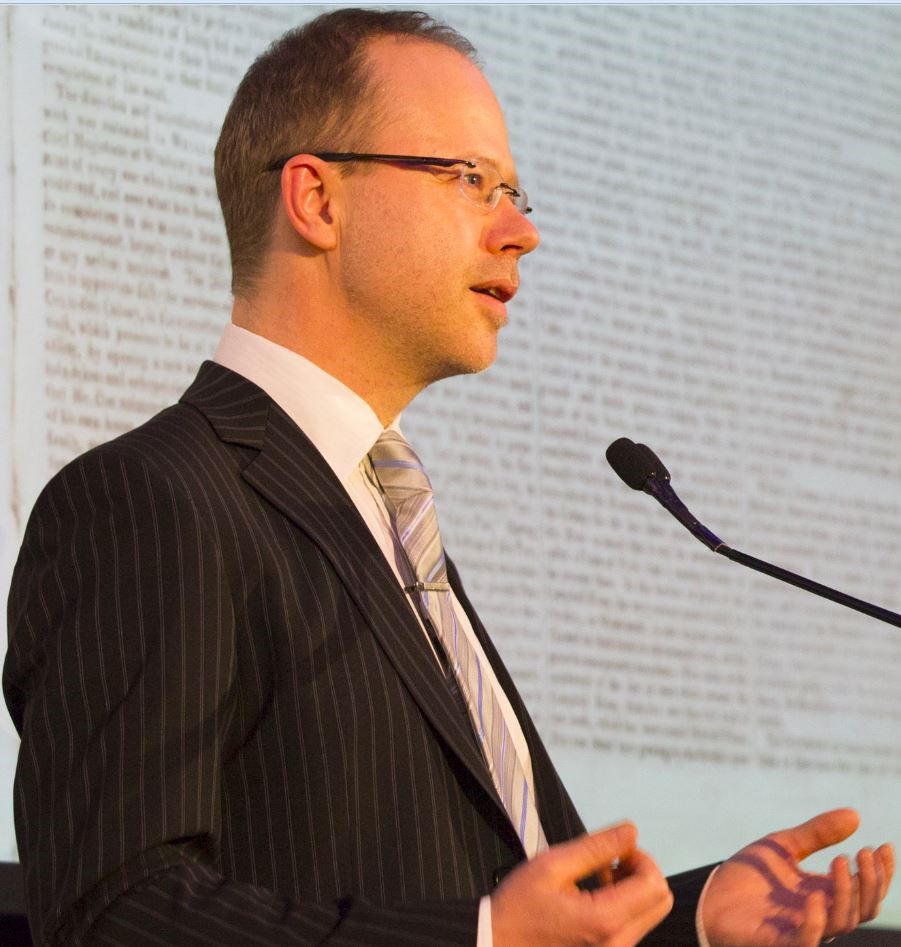
Paul Arthur is Vice-Chancellor’s Professorial Research Fellow, and Professor of Digital Humanities and Social Sciences, at Edith Cowan University, Western Australia. He speaks and publishes widely on major challenges and changes facing 21st-century society, from the global impacts of technology on communication, culture and identity to migration and human rights. Paul Arthur has over 100 publications including 13 books, and has received A$10M in grant funding, individually and in collaboration. His latest book is Open Scholarship in the Humanities (Bloomsbury 2024, with Lydia Hearn). A Fellow of the Royal Historical Society, he has held visiting positions in Europe, Asia-Pacific and North America, and given more than 50 keynote and plenary talks in 20 countries. Click here for full Profilesearch
recent
- Open Scholarship in the Humanities
- Border Crossings: Essays in Identity and Belonging
- Migration Experiences: Acknowledging the Past, and Sustaining the Present and Future
- Migrating People, Migrating Data: Digital Approaches to Migrant Heritage
- Migrant Nation
- Engaging Collections and Communities: Technology and Interactivity in Museums
- Digital Postmodernism and Postcolonialism
- Things Fall Apart: Identity in the Digital World
- Data Portraits: Identity, Privacy, and Surveillance
- Coda: Data Generation
Tag Cloud
18th Century Antipodes Australia Biography Cartography Collaboration Commemoration Communication Community Cross-Cultural Cultural Data Digital e-Research Exhibitions Experimental Fiction Genre Globalisation Heritage History Humanities Identity Informatics Infrastructure Interactive Interface Internet Life Writing Media Memory Mythology Narrative Networks Online Oral History Pacific Representation Storytelling Technology Textuality Theory Trauma Travel WarArchives
- November 2024 (1)
- June 2019 (1)
- December 2018 (1)
- November 2018 (1)
- April 2018 (1)
- March 2018 (1)
- January 2018 (1)
- October 2017 (1)
- April 2017 (1)
- September 2015 (1)
- May 2015 (2)
- November 2014 (2)
- October 2014 (2)
- September 2014 (2)
- August 2014 (1)
- March 2013 (1)
- December 2012 (1)
- February 2012 (2)
- November 2011 (2)
- April 2011 (3)
- February 2011 (1)
- December 2010 (2)
- November 2010 (1)
- April 2010 (1)
- July 2009 (1)
- March 2009 (1)
- February 2009 (1)
- January 2009 (1)
- October 2008 (1)
- September 2008 (1)
- August 2008 (1)
- May 2008 (1)
- April 2008 (1)
- March 2008 (1)
- January 2008 (1)
- August 2007 (1)
- January 2007 (1)
- November 2006 (1)
- July 2006 (1)
- October 2005 (1)
Categories
- 18th Century (3)
- Biography (12)
- Communication and Media Studies (23)
- Cultural Studies (38)
- Digital Scholarship (19)
- e-Research (12)
- Historical Studies (21)
- History (2)
- Humanities (22)
- Life Writing (23)
- Literary Studies (9)
- Museum Studies (3)
- Postcolonial Studies (6)
- Travel Writing (1)
feeds

Follow Paul



gmail [dot] com