The Archives
-
Biography, Cultural Studies, Historical Studies, Humanities, Life Writing
Migrating People, Migrating Data: Digital Approaches to Migrant Heritage
09.11.18 | Permalink | Comments Off on Migrating People, Migrating Data: Digital Approaches to Migrant HeritageGlobal migration is one of the defining characteristics of the twentieth and early twenty-first centuries. Migrants all over the world have left multiple traces in different countries, and this cultural heritage is of growing interest to researchers and to the migrant communities themselves. Cultural heritage institutions, however, have dwindling funds and resources to meet the demand for the heritage of immigrant communities to be protected.
In this article we propose that the key to bridging this gap is to be found in new possibilities that are opened up if resources are linked to enable digital exploration of archival records and collections. In particular, we focus on the value of building a composite and distributed resource around migrants’ life courses. If this approach is used and dispersed collections held by heritage institutions can be linked, migrant communities can have access to detailed information about their families and researchers to a wealth of data—serial and qualitative—for sophisticated and innovative research. Not only does the scattered data become more usable and manageable, it becomes more visible and coherent; patterns can be discovered that were not apparent before. We use the Dutch-Australian collaborative project “Migrant: Mobilities and Connection” as an example and case study of this life course–centered methodology and propose that this may develop into a migration heritage template for migrants worldwide.
-
Biography, Cultural Studies, Historical Studies, Life Writing
Migrant Nation
05.04.18 | Permalink | Comments Off on Migrant Nation‘Migrant Nation: Australian Culture, Society and Identity’ provides a rich understanding of the complexity of contemporary Australian society – its politics, culture and identity.
The essays in ‘Migrant Nation’ explore the gap between Australian image and experience, telling stories of individuals and groups that offer fresh insights into identity construction. In this way this collection casts light onto the hidden face Australian identity and pays respect to the experiences of a wide variety of people who have generally been excluded, neglected or simply forgotten in the long-running quest to tell a unified story of Australian culture and identity, a story that is rapidly unravelling.
Whether in terms of language, history, culture or personal circumstances, many of the subjects of these essays were foreign to the settler dream. The stories reveal their efforts to establish a sense of legitimacy and belonging outside of the dominant Australian story. Drawing upon memories, letters, interviews, documentary fragments and archives, the authors have in common a commitment to give life to neglected histories and thus to include, in an expanding and open-ended national narrative, people who were cast as strangers in the place that was their home.
Published January 2018: http://www.anthempress.com/migrant-nation
-
Biography, Cultural Studies, Digital Scholarship, Historical Studies
New Digital Resource for Australian National Identity
11.12.12 | Permalink | Comments Off on New Digital Resource for Australian National IdentityThe online version of Volume 18 of the Australian Dictionary of Biography, which tells the life stories of hundreds of significant and celebrated Australians, will be launched tonight at The Australian National University. Featuring articles on 670 individuals with surnames from L to Z who died between 1981 and 1990, the Australian Dictionary of Biography (ADB) presents a colourful mosaic of twentieth-century Australia. Included in the ADB are explorers, farmers, criminals, ballet dancers, speedway riders, and authors and politicians such as Patrick White, Christina Stead, William McMahon and Billy Sneddon. Vice-Chancellor Professor Ian Young, who will officially launch the latest version of the online Dictionary, said that the stories and lives featured in the ADB illuminate major themes in our recent history. “A vast range of people are consulting the Australian Dictionary of Biography online – researchers, students at primary, secondary and tertiary level, genealogists, and people watching documentaries and historical dramas on TV,” he said. “Since going online in 2006, the ADB now attracts 70 million views a year.”
-
Communication and Media Studies, Cultural Studies, e-Research, Historical Studies
Toward a Global Digital History
25.11.11 | Permalink | Comments Off on Toward a Global Digital HistoryDigital history spans disciplines and can take many forms. Computer technology started to revolutionize the study of history more than three decades ago, and yet genres and formats for recording and presenting history using digital media are not well established and we are only now starting to see large-scale benefits. New modes of publication, new methods for doing research, and new channels of communication are making historical research richer, more relevant, and globally accessible. Many applications of computer-based research and publication are natural extensions of the established techniques for researching and writing history. Others are consciously experimental. This chapter discusses the latest advances in the digital history field and explores how new media technologies are reconfiguring the study of the past.
-
Cultural Studies, Historical Studies, Humanities
Historical Encyclopedia of Western Australia
07.11.11 | Permalink | Comments Off on Historical Encyclopedia of Western AustraliaAlmost a decade in the making, the Historical Encyclopedia of Western Australia, edited by Jenny Gregory and Jan Gothard, is now the most up to date and authoritative composite portrait of the state’s history. This work is a remarkable achievement. It is the result of a sustained collaborative effort that is a credit to the skill and energy of the editorial team and to the more than three hundred contributors, along with hundreds of expert readers. In 1912 J. S. Battye, the well-known State Librarian of Western Australia, produced the Cyclopedia of Western Australia: An Historical and Commercial Review, Descriptive and Biographical Facts, Figures and Illustrations, which remained a central reference resource for WA history throughout the twentieth century. The highly regarded volumes of the sesquicentenary series appeared in 1979, followed in 1981 by the influential A New History of Western Australia, edited by Tom Stannage.
-
Cultural Studies, Historical Studies, Humanities, Museum Studies
Exploration and Endeavour
08.02.11 | Permalink | Comments Off on Exploration and EndeavourExploration & Endeavour: The Royal Society of London and the South Seas celebrates the society’s 350th anniversary by bringing together a selection of iconic objects and original documents that highlight the society’s key role in European maritime exploration and discovery in the Pacific. The Royal Society, the world’s oldest scientific academy in continuous existence, was founded on the premise that knowledge should be subject to independent verification—‘freeing oneself from unexamined opinion, particularly through the study of empirical data’, as Andrew Sayers puts it in his introduction to the beautifully produced accompanying book publication. The society’s motto, Nullius in verba (‘Take no-one’s word for it’), attests to this commitment to independence of thought, underpinned by methodologically rigorous inquiry. Fellows of the society include larger-than-life figures who in many cases have revolutionised their field: Isaac Newton, Michael Faraday, Christopher Wren, Charles Darwin, Ernest Rutherford, Albert Einstein, Dorothy Hodgkin, Francis Crick, James Watson, Stephen Hawking and, with particular relevance in the Pacific context, James Cook and Joseph Banks.
-
Biography, Cultural Studies, Digital Scholarship, Life Writing
Making Them Live
20.12.10 | Permalink | Comments Off on Making Them LiveThe Australian Dictionary of Biography (ADB) is the premier reference resource for the study of the lives of Australians who were significant in Australian history. Its 50 year anniversary was celebrated in 2009 with a special symposium ‘Between the Past and the Future’, which brought together past employees of and contributors to this important national project. Seventeen volumes of the dictionary and one supplementary volume have been published under the Melbourne University Press imprint, with Volume 18 (covering people who died between 1981 and 1990, surnames beginning L to Z) due to appear in 2012. The editorial unit that produces the ADB has been led by General Editor Professor Melanie Nolan since 2008. In that year, the National Centre of Biography (NCB) was established at the Australian National University to extend the work of the ADB and to serve as a focus for the study of life writing in Australia, supporting the highest standards in the field, nationally and internationally.
-
Cultural Studies, Digital Scholarship, Historical Studies
Gallipoli Online
07.12.10 | Permalink | Comments Off on Gallipoli OnlineAt the heart of the national narrative in Australia is the potent and enduring story of the Australian and New Zealand soldiers—the ANZACs—who fought at Gallipoli, in Turkey, in the First World War, against impossible odds. It is a story that has taken on legendary significance. Each year, on the anniversary of the catastrophic Gallipoli conflict of 25 April 1915, there is a national holiday and Australians in ever-increasing numbers attend Anzac dawn services—conducted at memorials across the nation—to honour the dead of this and later wars. The role of the Gallipoli: The First Day website is not only to repeat and reinforce the Anzac message and make it more accessible, but also to offer a new assemblage of information utilising the 3D visual power of the digital environment.
-
Communication and Media Studies, Cultural Studies, Digital Scholarship, Historical Studies, Life Writing
Life Sentences
08.11.10 | Permalink | Comments Off on Life SentencesHung parliaments at the Federal level in Australia are very unusual. The first such political stalemate since 1910 occurred at the onset of World War II. The Federal election of 21 September 1940 was held 70 years prior to the 2010 ballot that ultimately confirmed Julia Gillard as prime minister of a minority Labor government. The Australian Dictionary of Biography tells the story of the 1940 election that led to Robert Menzies being returned as Prime Minister of a minority coalition government—followed by its downfall the next year—through the lives and careers of the key political players. These included Prime Ministers Joseph Lyons, Robert Menzies, Arthur Fadden and John Curtin, along with the two conservative Victorian Independents, Arthur Coles and Alexander Wilson, who held the balance of power in the House of Representatives.
-
18th Century, Cultural Studies, Historical Studies, Humanities, Literary Studies, Postcolonial Studies, Travel Writing
Virtual Voyages
25.04.10 | Permalink | Comments Off on Virtual VoyagesBorn out of an ancient geographical theory of balance, the term ‘antipodes’ was first used to refer to the vast uncharted underworld of the southern hemisphere from a northern perspective. The principle behind this belief, as described in the Quarterly Review in the nineteenth century, was ‘that all the land, which had till then been discovered in the southern hemisphere, was insufficient to form a counterpoise to the weight of land in the northern half of the globe’. The idea of the antipodes as a counterbalance, though now remembered only as a peculiar, discredited theory, has been surprisingly influential as an imaginative concept. An antipodean expectancy filled minds, maps, novels and utopian plans, laying the foundations for perceptions of Oceania and Australasia that continue to impact on how this part of the world is seen from a distance as well as from within. The region of the antipodes has been occupied by European settlers and their descendants for a relatively short time. And yet, this brief period is set against a backdrop of one of the longest recorded histories of imagining prior to geographical discovery.
about
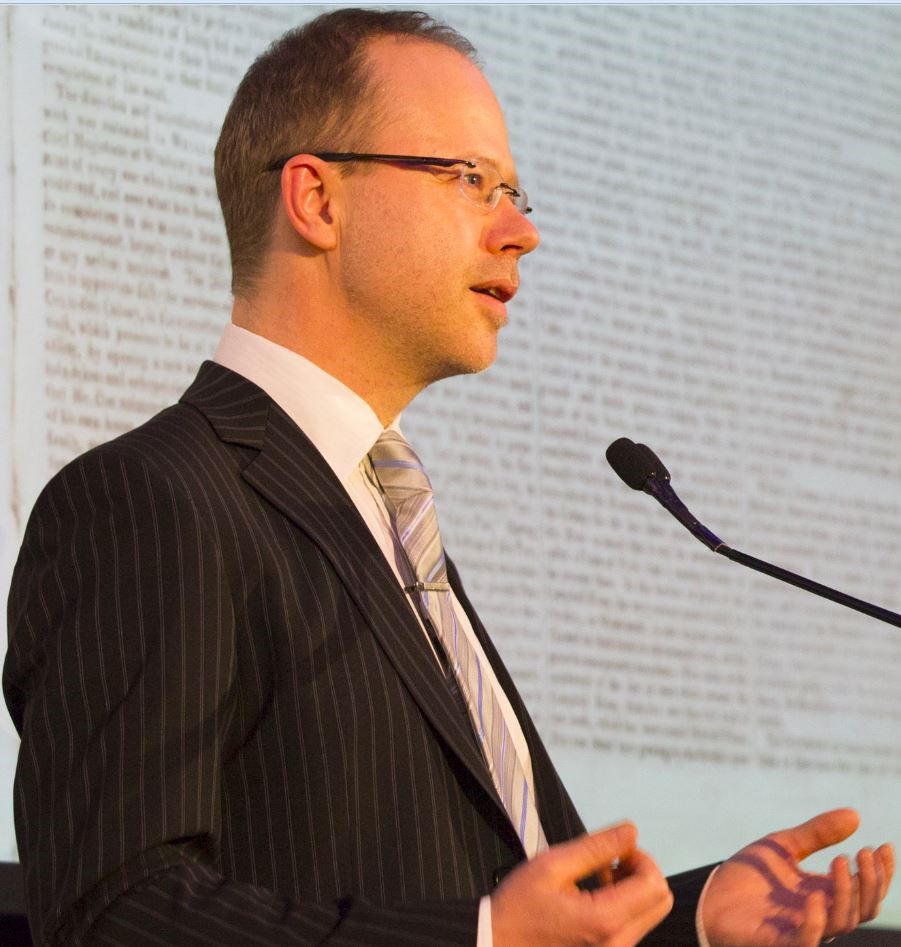
Paul Arthur is Vice-Chancellor’s Professorial Research Fellow, and Professor of Digital Humanities and Social Sciences, at Edith Cowan University, Western Australia. He speaks and publishes widely on major challenges and changes facing 21st-century society, from the global impacts of technology on communication, culture and identity to migration and human rights. Paul Arthur has over 100 publications including 13 books, and has received A$10M in grant funding, individually and in collaboration. His latest book is Open Scholarship in the Humanities (Bloomsbury 2024, with Lydia Hearn). A Fellow of the Royal Historical Society, he has held visiting positions in Europe, Asia-Pacific and North America, and given more than 50 keynote and plenary talks in 20 countries. Click here for full Profilesearch
recent
- Open Scholarship in the Humanities
- Border Crossings: Essays in Identity and Belonging
- Migration Experiences: Acknowledging the Past, and Sustaining the Present and Future
- Migrating People, Migrating Data: Digital Approaches to Migrant Heritage
- Migrant Nation
- Engaging Collections and Communities: Technology and Interactivity in Museums
- Digital Postmodernism and Postcolonialism
- Things Fall Apart: Identity in the Digital World
- Data Portraits: Identity, Privacy, and Surveillance
- Coda: Data Generation
Tag Cloud
18th Century Antipodes Australia Biography Cartography Collaboration Commemoration Communication Community Cross-Cultural Cultural Data Digital e-Research Exhibitions Experimental Fiction Genre Globalisation Heritage History Humanities Identity Informatics Infrastructure Interactive Interface Internet Life Writing Media Memory Mythology Narrative Networks Online Oral History Pacific Representation Storytelling Technology Textuality Theory Trauma Travel WarArchives
- November 2024 (1)
- June 2019 (1)
- December 2018 (1)
- November 2018 (1)
- April 2018 (1)
- March 2018 (1)
- January 2018 (1)
- October 2017 (1)
- April 2017 (1)
- September 2015 (1)
- May 2015 (2)
- November 2014 (2)
- October 2014 (2)
- September 2014 (2)
- August 2014 (1)
- March 2013 (1)
- December 2012 (1)
- February 2012 (2)
- November 2011 (2)
- April 2011 (3)
- February 2011 (1)
- December 2010 (2)
- November 2010 (1)
- April 2010 (1)
- July 2009 (1)
- March 2009 (1)
- February 2009 (1)
- January 2009 (1)
- October 2008 (1)
- September 2008 (1)
- August 2008 (1)
- May 2008 (1)
- April 2008 (1)
- March 2008 (1)
- January 2008 (1)
- August 2007 (1)
- January 2007 (1)
- November 2006 (1)
- July 2006 (1)
- October 2005 (1)
Categories
- 18th Century (3)
- Biography (12)
- Communication and Media Studies (23)
- Cultural Studies (38)
- Digital Scholarship (19)
- e-Research (12)
- Historical Studies (21)
- History (2)
- Humanities (22)
- Life Writing (23)
- Literary Studies (9)
- Museum Studies (3)
- Postcolonial Studies (6)
- Travel Writing (1)
feeds

Follow Paul



gmail [dot] com