The Archives
-
Communication and Media Studies, Digital Scholarship, Museum Studies
Engaging Collections and Communities: Technology and Interactivity in Museums
01.03.18 | Permalink | Comments Off on Engaging Collections and Communities: Technology and Interactivity in MuseumsThe uptake of Web 2.0 services at the start of this century has brought new freedoms in terms of museums’ relationship with the public. Historically, museums, like so many institutions, have understood their role as containing, controlling and regulating public interaction with a protected and guarded resource. Authority has been generated through this controlled interaction. The very notion of mediated access rests on the intermediary role of curators and institutions. However, social media now facilitates far greater dialogue between experts and the public, levelling the traditional hierarchies and moving from the one-way information flow to a two-way relationship. Today online communities of interest give new value to the electronic dimension of institutions, sustaining the interest base and attracting visitors through the door. The changing nature of museums, bringing with them shifting notions of curatorship, has prompted radical changes in museum practices. Museums are not only guardians but are entrepreneurs – linking, facilitating and marketing collections.
-
Communication and Media Studies, Digital Scholarship, Literary Studies, Postcolonial Studies
Digital Postmodernism and Postcolonialism
05.01.18 | Permalink | Comments Off on Digital Postmodernism and PostcolonialismDigital interactivity has triggered a transformation whose impact is greater than that of any other innovation in the history of technologies of communication. According to a 2016 Ericsson Mobility Report, over 90% of the world’s population will be covered by mobile broadband networks by 2021. “The world has been redrawn,” claims the Internet critic Andrew Keen, “as a distributed network.” It is becoming evident that we too are being redrawn as human beings, as individuals, and as citizens. At the heart of the change from analogue and print to digital is the capacity for connectedness that information technology brings – connectedness of information in and between databases, between experts and the public, between communities across the world, and between the arts and the sciences.
-
Biography, Communication and Media Studies, Digital Scholarship, Life Writing
Data Portraits: Identity, Privacy, and Surveillance
30.04.17 | Permalink | Comments Off on Data Portraits: Identity, Privacy, and Surveillance“Our pasts are becoming etched like a tattoo into our digital skins,” wrote J. D. Lasica in 1998. Since then, developments relating to online identity and privacy have progressively borne out his provocative assertion. Today, mass surveillance of our lives has become commonplace and endemic, leading to what Andrew Keen has described as a “catastrophe of abundance” of personal data.
When Time named its 2006 Person of the Year as “You,” it was signaling a global trend toward deep integration of data and algorithmic culture into our lives with the rise of social media. On its front cover, a computer screen displaying the word “You” served as a reflective mirror. “Yes you,” the caption explains, “You control the Information Age,” and “you” are responsible for “founding and framing the new digital democracy.” The mirror symbolically captured the open-endedness of the Internet and its readiness to be filled with reflections of ourselves while the “you” defined this moment in terms of individual empowerment.
-
Communication and Media Studies, Digital Scholarship, e-Research, Humanities
Advancing Digital Humanities
05.11.14 | Permalink | Comments Off on Advancing Digital HumanitiesAdvancing Digital Humanities moves beyond definition of this dynamic and fast growing field to show how its arguments, analyses, findings and theories are pioneering new directions in the humanities globally. Sections cover digital methods, critical curation and research futures, with theoretical and practical chapters framed around key areas of activity including modelling collections, data-driven analysis, and thinking through building. These are linked through the concept of ‘ambitious generosity’, a way of working to pursue large-scale research questions while supporting and enabling other research areas and approaches, both within and beyond the academy.
-
Cultural Studies, Digital Scholarship, e-Research, Humanities
Launch of HuNI Virtual Laboratory for Australian Cultural Data
01.11.14 | Permalink | Comments Off on Launch of HuNI Virtual Laboratory for Australian Cultural DataThe Humanities Networked Infrastructure (HuNI) is a national Virtual Laboratory project developed as part of the Australian government’s NeCTAR (National e-Research Collaboration Tools and Resources) program. HuNI combines information from 30 of Australia’s most significant cultural datasets. These datasets comprise more than 2 million authoritative records relating to the people, organisations, objects and events that make up Australia’s rich cultural heritage. HuNI also enables researchers to work with and share this large-scale aggregation of cultural information. HuNI has been developed as a partnership between 13 public institutions, led by Deakin University. By providing researchers worldwide with access to the combined resources of Australia’s most important cultural datasets and information assets, HuNI is recognised as the first national, cross-disciplinary virtual laboratory of its kind to be established anywhere in the world.
-
Communication and Media Studies, Cultural Studies, e-Research, Historical Studies
Toward a Global Digital History
25.11.11 | Permalink | Comments Off on Toward a Global Digital HistoryDigital history spans disciplines and can take many forms. Computer technology started to revolutionize the study of history more than three decades ago, and yet genres and formats for recording and presenting history using digital media are not well established and we are only now starting to see large-scale benefits. New modes of publication, new methods for doing research, and new channels of communication are making historical research richer, more relevant, and globally accessible. Many applications of computer-based research and publication are natural extensions of the established techniques for researching and writing history. Others are consciously experimental. This chapter discusses the latest advances in the digital history field and explores how new media technologies are reconfiguring the study of the past.
-
Cultural Studies, Historical Studies, Humanities, Museum Studies
Exploration and Endeavour
08.02.11 | Permalink | Comments Off on Exploration and EndeavourExploration & Endeavour: The Royal Society of London and the South Seas celebrates the society’s 350th anniversary by bringing together a selection of iconic objects and original documents that highlight the society’s key role in European maritime exploration and discovery in the Pacific. The Royal Society, the world’s oldest scientific academy in continuous existence, was founded on the premise that knowledge should be subject to independent verification—‘freeing oneself from unexamined opinion, particularly through the study of empirical data’, as Andrew Sayers puts it in his introduction to the beautifully produced accompanying book publication. The society’s motto, Nullius in verba (‘Take no-one’s word for it’), attests to this commitment to independence of thought, underpinned by methodologically rigorous inquiry. Fellows of the society include larger-than-life figures who in many cases have revolutionised their field: Isaac Newton, Michael Faraday, Christopher Wren, Charles Darwin, Ernest Rutherford, Albert Einstein, Dorothy Hodgkin, Francis Crick, James Watson, Stephen Hawking and, with particular relevance in the Pacific context, James Cook and Joseph Banks.
-
Biography, Communication and Media Studies, Cultural Studies, Humanities, Life Writing, Literary Studies
Digital Biography
25.07.09 | Permalink | Comments Off on Digital BiographyThis paper reflects on an emerging field that has no accepted name or boundaries but is described here as “digital biography.” The activities, formats, and genres associated with this field are rarely linked with life writing or traditional biographical studies. Rather, this field is seen as the domain of those concerned with digital privacy, copyright, data preservation, and identity management. Over the past decade or so, critics in various disciplines, mainly legal studies, information management, multimedia design, and IT development, as well as sociology, psychology, and marketing, have focused on the complexity of online identity. Though online identity has become such a significant focus of attention in these disciplines, few who study biography have discussed it. Indeed, as Nigel Hamilton points out, biography itself has had less attention than one might expect for a field that “has enjoyed an extraordinary renaissance in recent years”, a field that, according to Carl Rollyson, is widely recognized as “the dominant non-fiction of our age”.
-
Communication and Media Studies, Cultural Studies, Humanities, Life Writing
Saving Lives: Digital Biography and Life Writing
25.02.09 | Permalink | Comments Off on Saving Lives: Digital Biography and Life WritingIn this first decade of the twenty-first century we are caught up in the midst of a technological shift of the kind that Walter Benjamin, in his 1936 essay ‘The Work of Art in the Age of Mechanical Reproduction’, attributed to the increasing popularity of photography in the early twentieth century. The essence of that change was the unprecedented capacity to create infinitely reproducible multiple copies. For the first time the idea of the primacy of the singular work of art was seriously open to question. ‘The history of every art form,’ writes Benjamin, ‘shows critical epochs in which a certain art form aspires to effects which could be fully obtained only with a changed technical standard, that is to say, a new art form’. Photography initiated a change that Benjamin recognised as being as profound in its impact on people’s lives as the introduction of the printing press.
-
Communication and Media Studies, Digital Scholarship, e-Research, Humanities
Virtual Strangers: e-Research and the Humanities
25.01.09 | Permalink | Comments Off on Virtual Strangers: e-Research and the HumanitiesThe Arts and Humanities have traditionally been worlds apart from Science and Technology in their ways of pursuing and generating knowledge and understanding. So much so that the famous term, ‘The Two Cultures’, coined in the mid twentieth century by C. P. Snow to describe the vast gap between these discipline areas, is still current and relevant.[i] It continues to dominate the organisation of disciplines in universities and drive the distribution of most national research funding. However, quite suddenly, at the end of the twentieth century, the digital environment began to trigger major changes in the knowledge economy, with the result that the humanities were thrown unexpectedly and involuntarily into a close relationship with technology. As one might expect in any forced marriage, it was not a case of love at first sight. In fact, the humanities have exhibited the full range of reactions—from totally ignoring the other, through unashamedly raiding their wealth, to wholeheartedly embracing the exciting future they seem to offer. Whatever the reaction, it is clear that the humanities are now inescapably entangled with technology, for better or worse, and the two cultures are connecting more than ever before, notably in the new research activities and spaces signalled by the term ‘e-research’.
about
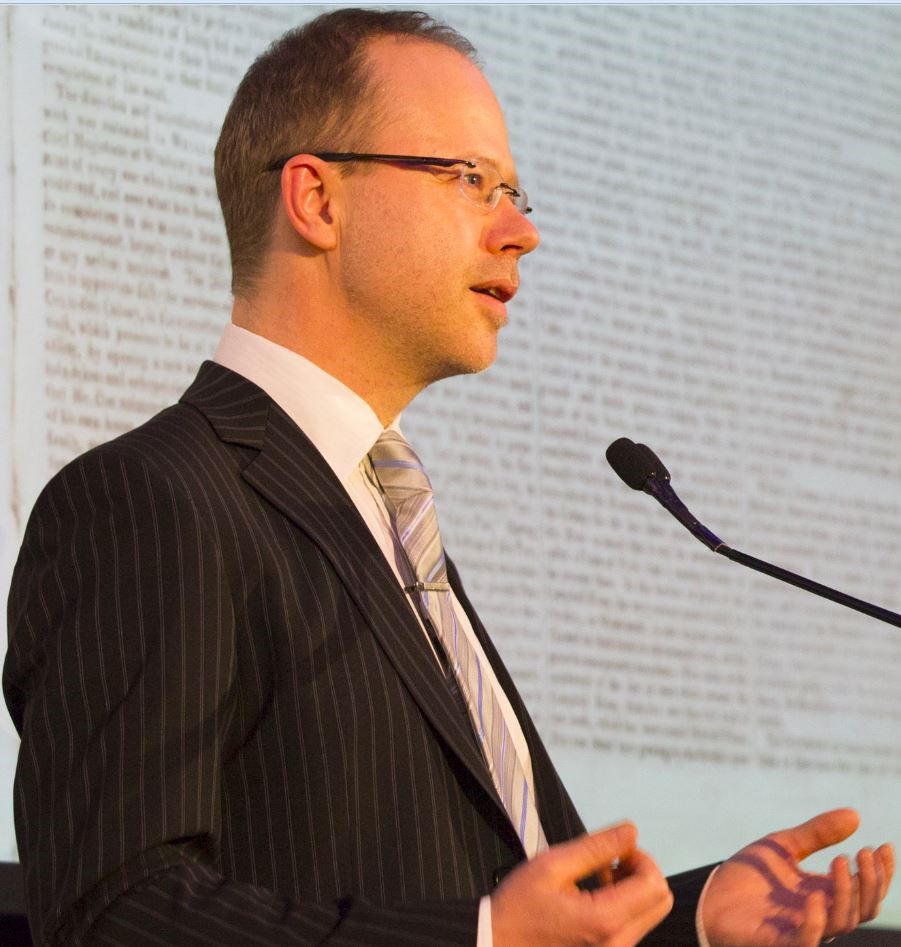
Paul Arthur is Vice-Chancellor’s Professorial Research Fellow, and Professor of Digital Humanities and Social Sciences, at Edith Cowan University, Western Australia. He speaks and publishes widely on major challenges and changes facing 21st-century society, from the global impacts of technology on communication, culture and identity to migration and human rights. Paul Arthur has over 100 publications including 13 books, and has received A$10M in grant funding, individually and in collaboration. His latest book is Open Scholarship in the Humanities (Bloomsbury 2024, with Lydia Hearn). A Fellow of the Royal Historical Society, he has held visiting positions in Europe, Asia-Pacific and North America, and given more than 50 keynote and plenary talks in 20 countries. Click here for full Profilesearch
recent
- Open Scholarship in the Humanities
- Border Crossings: Essays in Identity and Belonging
- Migration Experiences: Acknowledging the Past, and Sustaining the Present and Future
- Migrating People, Migrating Data: Digital Approaches to Migrant Heritage
- Migrant Nation
- Engaging Collections and Communities: Technology and Interactivity in Museums
- Digital Postmodernism and Postcolonialism
- Things Fall Apart: Identity in the Digital World
- Data Portraits: Identity, Privacy, and Surveillance
- Coda: Data Generation
Tag Cloud
18th Century Antipodes Australia Biography Cartography Collaboration Commemoration Communication Community Cross-Cultural Cultural Data Digital e-Research Exhibitions Experimental Fiction Genre Globalisation Heritage History Humanities Identity Informatics Infrastructure Interactive Interface Internet Life Writing Media Memory Mythology Narrative Networks Online Oral History Pacific Representation Storytelling Technology Textuality Theory Trauma Travel WarArchives
- November 2024 (1)
- June 2019 (1)
- December 2018 (1)
- November 2018 (1)
- April 2018 (1)
- March 2018 (1)
- January 2018 (1)
- October 2017 (1)
- April 2017 (1)
- September 2015 (1)
- May 2015 (2)
- November 2014 (2)
- October 2014 (2)
- September 2014 (2)
- August 2014 (1)
- March 2013 (1)
- December 2012 (1)
- February 2012 (2)
- November 2011 (2)
- April 2011 (3)
- February 2011 (1)
- December 2010 (2)
- November 2010 (1)
- April 2010 (1)
- July 2009 (1)
- March 2009 (1)
- February 2009 (1)
- January 2009 (1)
- October 2008 (1)
- September 2008 (1)
- August 2008 (1)
- May 2008 (1)
- April 2008 (1)
- March 2008 (1)
- January 2008 (1)
- August 2007 (1)
- January 2007 (1)
- November 2006 (1)
- July 2006 (1)
- October 2005 (1)
Categories
- 18th Century (3)
- Biography (12)
- Communication and Media Studies (23)
- Cultural Studies (38)
- Digital Scholarship (19)
- e-Research (12)
- Historical Studies (21)
- History (2)
- Humanities (22)
- Life Writing (23)
- Literary Studies (9)
- Museum Studies (3)
- Postcolonial Studies (6)
- Travel Writing (1)
feeds

Follow Paul



gmail [dot] com