The Archives
-
Communication and Media Studies, Digital Scholarship, Humanities
Open Scholarship in the Humanities
15.11.24 | Permalink | Comments Off on Open Scholarship in the HumanitiesExploring the rise of open scholarship in the digital era and its transformational impact on how knowledge is created, shared, and accessed, this open access book offers new insights on the history, development, and future directions of openness in the humanities and identifies key drivers, opportunities, and challenges. The concept of open research is reconfiguring […]
-
Communication and Media Studies, Cultural Studies, Digital Scholarship, Historical Studies, Humanities, Life Writing
Migration Experiences: Acknowledging the Past, and Sustaining the Present and Future
05.12.18 | Permalink | Comments Off on Migration Experiences: Acknowledging the Past, and Sustaining the Present and FutureAustralia is recognised as one of the world’s most culturally and ethnically diverse nations. Immigration has historically played an important role in the nation’s economic, social and cultural development. There is a pressing need to find innovative technological and archival approaches to deal with the challenge to digitally preserve Australia’s migrant heritage, especially given the ageing of the European communities that were the first to come under the postwar mass migration scheme. This paper reports on plans for a national collaborative project to develop the foundational infrastructure for a dynamic, interoperable, migrant data resource for research and education.
The Migration Experiences platform will connect and consolidate heterogeneous collections and resources and will provide an international exemplar underscoring the importance of digital preservation of cultural heritage and highlighting the opportunities new technologies can offer.
-
Communication and Media Studies, Digital Scholarship, e-Research, Humanities
Advancing Digital Humanities
05.11.14 | Permalink | Comments Off on Advancing Digital HumanitiesAdvancing Digital Humanities moves beyond definition of this dynamic and fast growing field to show how its arguments, analyses, findings and theories are pioneering new directions in the humanities globally. Sections cover digital methods, critical curation and research futures, with theoretical and practical chapters framed around key areas of activity including modelling collections, data-driven analysis, and thinking through building. These are linked through the concept of ‘ambitious generosity’, a way of working to pursue large-scale research questions while supporting and enabling other research areas and approaches, both within and beyond the academy.
-
Communication and Media Studies, Cultural Studies, e-Research, Historical Studies
Toward a Global Digital History
25.11.11 | Permalink | Comments Off on Toward a Global Digital HistoryDigital history spans disciplines and can take many forms. Computer technology started to revolutionize the study of history more than three decades ago, and yet genres and formats for recording and presenting history using digital media are not well established and we are only now starting to see large-scale benefits. New modes of publication, new methods for doing research, and new channels of communication are making historical research richer, more relevant, and globally accessible. Many applications of computer-based research and publication are natural extensions of the established techniques for researching and writing history. Others are consciously experimental. This chapter discusses the latest advances in the digital history field and explores how new media technologies are reconfiguring the study of the past.
-
Communication and Media Studies, Cultural Studies, e-Research, Humanities
eResearch Infrastructure for the Humanities, Arts and Social Sciences
29.04.11 | Permalink | Comments Off on eResearch Infrastructure for the Humanities, Arts and Social SciencesAustralian researchers are recognised internationally for delivering solutions to the most complex and challenging questions facing cultures and communities. Their contributions are vital to the nation’s social wellbeing. Encompassing the study of society, identity, economy, business, governance, history, culture and creativity, this broad field links universities, government agencies, collecting institutions and creative industries with policy development and with communities. However, complex issues of national and global significance cannot be solved in isolation. They demand collaborative approaches which in turn require the infrastructure to support them. Across all sectors, research practices are being fundamentally influenced by leading-edge ICT, and social and cultural data of immense significance is being generated in many different forms. With considerable investment worldwide in eResearch infrastructure, innovation in the humanities, arts and social sciences is increasingly dependent on enabling technology to support research excellence.
-
Biography, Communication and Media Studies, Cultural Studies, Humanities, Life Writing, Literary Studies
Digital Biography
25.07.09 | Permalink | Comments Off on Digital BiographyThis paper reflects on an emerging field that has no accepted name or boundaries but is described here as “digital biography.” The activities, formats, and genres associated with this field are rarely linked with life writing or traditional biographical studies. Rather, this field is seen as the domain of those concerned with digital privacy, copyright, data preservation, and identity management. Over the past decade or so, critics in various disciplines, mainly legal studies, information management, multimedia design, and IT development, as well as sociology, psychology, and marketing, have focused on the complexity of online identity. Though online identity has become such a significant focus of attention in these disciplines, few who study biography have discussed it. Indeed, as Nigel Hamilton points out, biography itself has had less attention than one might expect for a field that “has enjoyed an extraordinary renaissance in recent years”, a field that, according to Carl Rollyson, is widely recognized as “the dominant non-fiction of our age”.
-
Communication and Media Studies, Cultural Studies, Humanities, Life Writing
Saving Lives: Digital Biography and Life Writing
25.02.09 | Permalink | Comments Off on Saving Lives: Digital Biography and Life WritingIn this first decade of the twenty-first century we are caught up in the midst of a technological shift of the kind that Walter Benjamin, in his 1936 essay ‘The Work of Art in the Age of Mechanical Reproduction’, attributed to the increasing popularity of photography in the early twentieth century. The essence of that change was the unprecedented capacity to create infinitely reproducible multiple copies. For the first time the idea of the primacy of the singular work of art was seriously open to question. ‘The history of every art form,’ writes Benjamin, ‘shows critical epochs in which a certain art form aspires to effects which could be fully obtained only with a changed technical standard, that is to say, a new art form’. Photography initiated a change that Benjamin recognised as being as profound in its impact on people’s lives as the introduction of the printing press.
-
Communication and Media Studies, Cultural Studies, Digital Scholarship, Historical Studies
Hypermedia History: Changing Technologies of Representation
25.11.06 | Permalink | Comments Off on Hypermedia History: Changing Technologies of RepresentationTechnologies of representation are not just instruments of recording and reporting. Their basic attributes determine what it is actually possible to conceptualise, capture and articulate. Photography, to take a classic example, transformed people’s outlook on the world because it could provide an unrivalled visual framing of actuality. It had no equivalent in the prior traditions of visual communication. Technological invention spurs social change. By focussing on ‘technologies of representation’ I am not only concerned with the technological means that underpin specific forms of representation, although these fundamentally define the range of options available, but also with the ways of seeing and understanding that they open up. Tomas describes these beautifully as “a new type of amniotic environment for vision”.
about
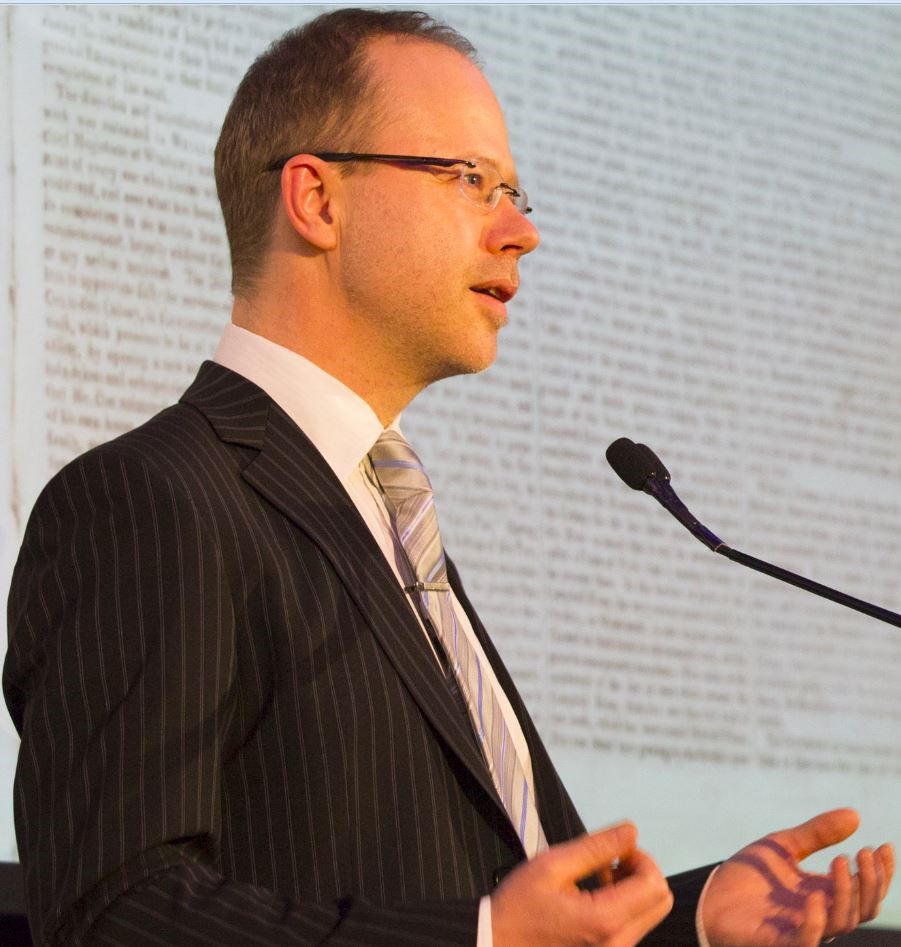
Paul Arthur is Vice-Chancellor’s Professorial Research Fellow, and Professor of Digital Humanities and Social Sciences, at Edith Cowan University, Western Australia. He speaks and publishes widely on major challenges and changes facing 21st-century society, from the global impacts of technology on communication, culture and identity to migration and human rights. Paul Arthur has over 100 publications including 13 books, and has received A$10M in grant funding, individually and in collaboration. His latest book is Open Scholarship in the Humanities (Bloomsbury 2024, with Lydia Hearn). A Fellow of the Royal Historical Society, he has held visiting positions in Europe, Asia-Pacific and North America, and given more than 50 keynote and plenary talks in 20 countries. Click here for full Profilesearch
recent
- Open Scholarship in the Humanities
- Border Crossings: Essays in Identity and Belonging
- Migration Experiences: Acknowledging the Past, and Sustaining the Present and Future
- Migrating People, Migrating Data: Digital Approaches to Migrant Heritage
- Migrant Nation
- Engaging Collections and Communities: Technology and Interactivity in Museums
- Digital Postmodernism and Postcolonialism
- Things Fall Apart: Identity in the Digital World
- Data Portraits: Identity, Privacy, and Surveillance
- Coda: Data Generation
Tag Cloud
18th Century Antipodes Australia Biography Cartography Collaboration Commemoration Communication Community Cross-Cultural Cultural Data Digital e-Research Exhibitions Experimental Fiction Genre Globalisation Heritage History Humanities Identity Informatics Infrastructure Interactive Interface Internet Life Writing Media Memory Mythology Narrative Networks Online Oral History Pacific Representation Storytelling Technology Textuality Theory Trauma Travel WarArchives
- November 2024 (1)
- June 2019 (1)
- December 2018 (1)
- November 2018 (1)
- April 2018 (1)
- March 2018 (1)
- January 2018 (1)
- October 2017 (1)
- April 2017 (1)
- September 2015 (1)
- May 2015 (2)
- November 2014 (2)
- October 2014 (2)
- September 2014 (2)
- August 2014 (1)
- March 2013 (1)
- December 2012 (1)
- February 2012 (2)
- November 2011 (2)
- April 2011 (3)
- February 2011 (1)
- December 2010 (2)
- November 2010 (1)
- April 2010 (1)
- July 2009 (1)
- March 2009 (1)
- February 2009 (1)
- January 2009 (1)
- October 2008 (1)
- September 2008 (1)
- August 2008 (1)
- May 2008 (1)
- April 2008 (1)
- March 2008 (1)
- January 2008 (1)
- August 2007 (1)
- January 2007 (1)
- November 2006 (1)
- July 2006 (1)
- October 2005 (1)
Categories
- 18th Century (3)
- Biography (12)
- Communication and Media Studies (23)
- Cultural Studies (38)
- Digital Scholarship (19)
- e-Research (12)
- Historical Studies (21)
- History (2)
- Humanities (22)
- Life Writing (23)
- Literary Studies (9)
- Museum Studies (3)
- Postcolonial Studies (6)
- Travel Writing (1)
feeds

Follow Paul



gmail [dot] com