» Next Entries
Category
Historical Studies
-
Cultural Studies, Digital Scholarship, Historical Studies
Gallipoli Online
07.12.10 | Permalink | Comments Off on Gallipoli OnlineAt the heart of the national narrative in Australia is the potent and enduring story of the Australian and New Zealand soldiers—the ANZACs—who fought at Gallipoli, in Turkey, in the First World War, against impossible odds. It is a story that has taken on legendary significance. Each year, on the anniversary of the catastrophic Gallipoli conflict of 25 April 1915, there is a national holiday and Australians in ever-increasing numbers attend Anzac dawn services—conducted at memorials across the nation—to honour the dead of this and later wars. The role of the Gallipoli: The First Day website is not only to repeat and reinforce the Anzac message and make it more accessible, but also to offer a new assemblage of information utilising the 3D visual power of the digital environment.
-
Communication and Media Studies, Cultural Studies, Digital Scholarship, Historical Studies, Life Writing
Life Sentences
08.11.10 | Permalink | Comments Off on Life SentencesHung parliaments at the Federal level in Australia are very unusual. The first such political stalemate since 1910 occurred at the onset of World War II. The Federal election of 21 September 1940 was held 70 years prior to the 2010 ballot that ultimately confirmed Julia Gillard as prime minister of a minority Labor government. The Australian Dictionary of Biography tells the story of the 1940 election that led to Robert Menzies being returned as Prime Minister of a minority coalition government—followed by its downfall the next year—through the lives and careers of the key political players. These included Prime Ministers Joseph Lyons, Robert Menzies, Arthur Fadden and John Curtin, along with the two conservative Victorian Independents, Arthur Coles and Alexander Wilson, who held the balance of power in the House of Representatives.
-
18th Century, Cultural Studies, Historical Studies, Humanities, Literary Studies, Postcolonial Studies, Travel Writing
Virtual Voyages
25.04.10 | Permalink | Comments Off on Virtual VoyagesBorn out of an ancient geographical theory of balance, the term ‘antipodes’ was first used to refer to the vast uncharted underworld of the southern hemisphere from a northern perspective. The principle behind this belief, as described in the Quarterly Review in the nineteenth century, was ‘that all the land, which had till then been discovered in the southern hemisphere, was insufficient to form a counterpoise to the weight of land in the northern half of the globe’. The idea of the antipodes as a counterbalance, though now remembered only as a peculiar, discredited theory, has been surprisingly influential as an imaginative concept. An antipodean expectancy filled minds, maps, novels and utopian plans, laying the foundations for perceptions of Oceania and Australasia that continue to impact on how this part of the world is seen from a distance as well as from within. The region of the antipodes has been occupied by European settlers and their descendants for a relatively short time. And yet, this brief period is set against a backdrop of one of the longest recorded histories of imagining prior to geographical discovery.
-
Cultural Studies, Historical Studies, Humanities, Life Writing
Trauma Online
25.03.09 | Permalink | Comments Off on Trauma OnlineThis article considers how traditional physical memorials to war and other catastrophic events differ from online memorials in the Web 2.0 environment and it asks what the benefits and drawbacks of each may be. There has always been an awkward fit between the public statements embodied in monuments to those who died in war and the personal stories told by individuals who returned. This disjuncture serves to demonstrate that the two ways of remembering traumatic events—the collective and the individual—have traditionally been poles apart and often contradictory. Gradually, over the past two decades, with the increasing influence of critical theories that have questioned national and other dominating discourses—and also with growing interest within the field of clinical psychology in what is now labeled post-traumatic stress disorder—there has been an increasing interest in the vast underlayer of personal stories that national narratives have shut out or silenced.
-
18th Century, Cultural Studies, Historical Studies, Humanities, Literary Studies, Postcolonial Studies
Fictions of Encounter
25.09.08 | Permalink | Comments Off on Fictions of EncounterThe “imaginary voyage” was an early form of the modern realist novel popular in Britain and France from the seventeenth to the early nineteenth centuries, set predominantly in the region of Australasia and the Pacific. As a branch of travel literature, it was linked intimately to the expansion of empire. Through repeated stories of successful colonizing schemes and heroic accounts of cross-cultural encounters between European travelers and the people of the antipodes, these texts allowed European readers to enjoy farfetched fantasies of colonization well before, and during, the period of actual colonial expansion. As in the case of the many better-known examples of literary fiction produced in the later period of European imperial dominance, imaginary voyage fiction helped embed social acceptance of colonial expansion by modeling cultural domination as natural, beneficial, and welcome.
-
18th Century, Cultural Studies, Historical Studies, Postcolonial Studies
Teaching and Learning Guide: Antipodean Myths Transformed
08.08.08 | Permalink | Comments Off on Teaching and Learning Guide: Antipodean Myths TransformedSample Syllabus:
Week 1: Introduction and Overview—Exploration and Colonisation of the Great South Land
- – The myth of the antipodes—the allure of the great south land
- – Gaps in maps—spaces for the imagination
Weeks 2–4: Fantasies of the Antipodes
- – The role of imaginary voyage texts—blending reality with fantasy, pre-programming colonisation
- – Myths of extreme difference
- – Myths of Indigenous populations’ welcoming attitude to colonial intrusion
- – Theories of otherness
Weeks 3–5: Entering the Antipodes
- – Early explorers’ contradictory responses to Terra Australis Incognita
- – Utopias and dystopias
- – First contact with Indigenous people—the concept of ‘terra nullius’ framed by myths
Weeks 6–8: Images of Contemporary Australia: Enduring Myths
- – The myth of terra nullius and the impact on Indigenous Australia
- – The ‘dead heart’ of Australia as the last unfathomed antipodean space
-
Cultural Studies, Digital Scholarship, Historical Studies, Humanities, Museum Studies
Exhibiting History: The Digital Future
25.04.08 | Permalink | Comments Off on Exhibiting History: The Digital FutureThis paper surveys the digital history field, highlighting trends across historical, cultural and literary studies, heritage, archaeology and geography, as well as library information, screen and media studies, multimedia production and interaction design. This broad field is increasingly relevant to museum practice as museums experiment with digital modes of presentation and communication, including virtual exhibitions and other online extensions of the physical visitor experience.
-
Communication and Media Studies, e-Research, Historical Studies, Humanities
Participating in the Past
25.03.08 | Permalink | Comments Off on Participating in the PastThe profile of oral history research has grown dramatically over the past two decades. One of the reasons for this is that there has been a diversification of modes of public access and delivery. The increasing use of digital media means that oral histories are now reaching far greater audiences, and these histories are being presented in more direct, more stimulating and richer ways than have before been possible. In fact, the digital revolution is rapidly transforming history as a genre and set of practices, and oral history is a key player in this process. Because oral histories lend themselves to digital forms of delivery much more readily than conventional, text-only, representations of history, oral history has come to be a central focus for digital history researchers.
-
Communication and Media Studies, Digital Scholarship, Historical Studies, Humanities
Experimental Histories
25.01.07 | Permalink | Comments Off on Experimental HistoriesInteractive digital technologies are transforming the processes of research and production across all major academic disciplines. The changes are most significant in traditional disciplines. In that of history, online public access to digitised historical resources has meant that the materials of history are now available to anyone who has access to the internet. Previously, the study of archives was only open to the dedicated specialist with access to the world’s major library collections. Digital technologies have not only enhanced access to resources, but they are also enabling the development and growth of new kinds of content delivery and new modes of historical narration. Although the book is not likely to be superseded any time soon, the book now competes with experimental digital works that are relating history in new and highly interactive ways.
-
Communication and Media Studies, Cultural Studies, Digital Scholarship, Historical Studies
Hypermedia History: Changing Technologies of Representation
25.11.06 | Permalink | Comments Off on Hypermedia History: Changing Technologies of RepresentationTechnologies of representation are not just instruments of recording and reporting. Their basic attributes determine what it is actually possible to conceptualise, capture and articulate. Photography, to take a classic example, transformed people’s outlook on the world because it could provide an unrivalled visual framing of actuality. It had no equivalent in the prior traditions of visual communication. Technological invention spurs social change. By focussing on ‘technologies of representation’ I am not only concerned with the technological means that underpin specific forms of representation, although these fundamentally define the range of options available, but also with the ways of seeing and understanding that they open up. Tomas describes these beautifully as “a new type of amniotic environment for vision”.
» Next Entries
about
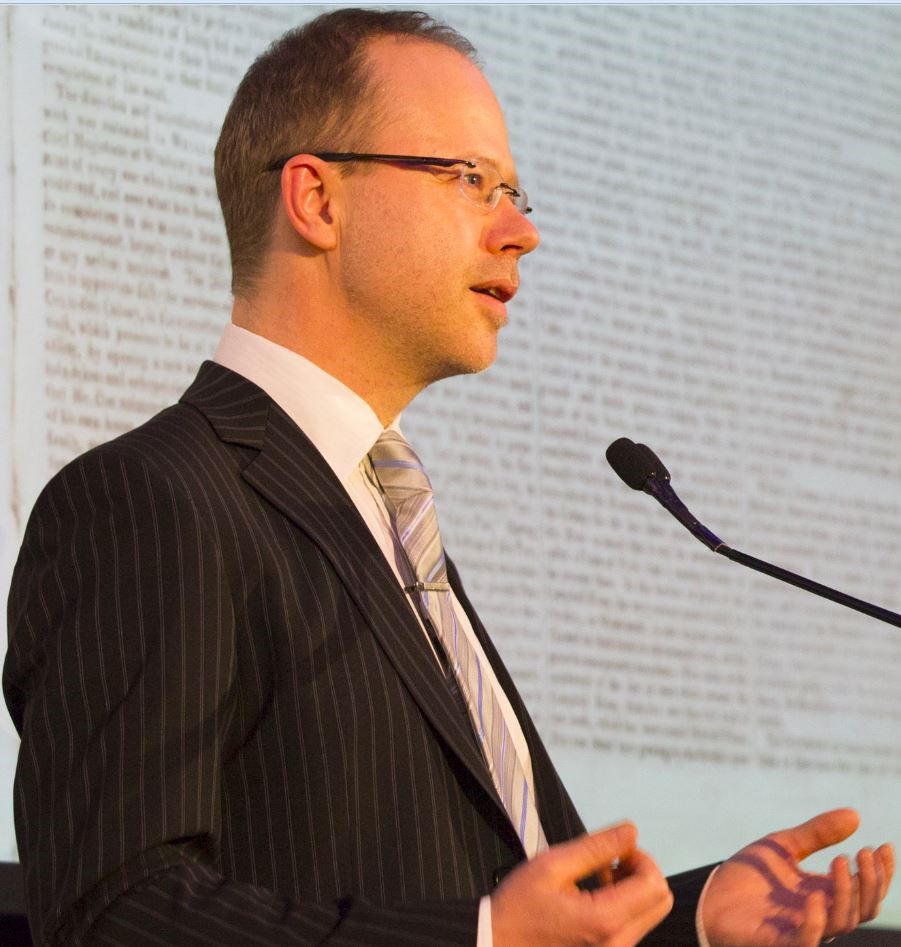
Paul Arthur is Vice-Chancellor’s Professorial Research Fellow, and Professor of Digital Humanities and Social Sciences, at Edith Cowan University, Western Australia. He speaks and publishes widely on major challenges and changes facing 21st-century society, from the global impacts of technology on communication, culture and identity to migration and human rights. Paul Arthur has over 100 publications including 13 books, and has received A$10M in grant funding, individually and in collaboration. His latest book is Open Scholarship in the Humanities (Bloomsbury 2024, with Lydia Hearn). A Fellow of the Royal Historical Society, he has held visiting positions in Europe, Asia-Pacific and North America, and given more than 50 keynote and plenary talks in 20 countries. Click here for full Profilesearch
recent
- Open Scholarship in the Humanities
- Border Crossings: Essays in Identity and Belonging
- Migration Experiences: Acknowledging the Past, and Sustaining the Present and Future
- Migrating People, Migrating Data: Digital Approaches to Migrant Heritage
- Migrant Nation
- Engaging Collections and Communities: Technology and Interactivity in Museums
- Digital Postmodernism and Postcolonialism
- Things Fall Apart: Identity in the Digital World
- Data Portraits: Identity, Privacy, and Surveillance
- Coda: Data Generation
Tag Cloud
18th Century Antipodes Australia Biography Cartography Collaboration Commemoration Communication Community Cross-Cultural Cultural Data Digital e-Research Exhibitions Experimental Fiction Genre Globalisation Heritage History Humanities Identity Informatics Infrastructure Interactive Interface Internet Life Writing Media Memory Mythology Narrative Networks Online Oral History Pacific Representation Storytelling Technology Textuality Theory Trauma Travel WarArchives
- November 2024 (1)
- June 2019 (1)
- December 2018 (1)
- November 2018 (1)
- April 2018 (1)
- March 2018 (1)
- January 2018 (1)
- October 2017 (1)
- April 2017 (1)
- September 2015 (1)
- May 2015 (2)
- November 2014 (2)
- October 2014 (2)
- September 2014 (2)
- August 2014 (1)
- March 2013 (1)
- December 2012 (1)
- February 2012 (2)
- November 2011 (2)
- April 2011 (3)
- February 2011 (1)
- December 2010 (2)
- November 2010 (1)
- April 2010 (1)
- July 2009 (1)
- March 2009 (1)
- February 2009 (1)
- January 2009 (1)
- October 2008 (1)
- September 2008 (1)
- August 2008 (1)
- May 2008 (1)
- April 2008 (1)
- March 2008 (1)
- January 2008 (1)
- August 2007 (1)
- January 2007 (1)
- November 2006 (1)
- July 2006 (1)
- October 2005 (1)
Categories
- 18th Century (3)
- Biography (12)
- Communication and Media Studies (23)
- Cultural Studies (38)
- Digital Scholarship (19)
- e-Research (12)
- Historical Studies (21)
- History (2)
- Humanities (22)
- Life Writing (23)
- Literary Studies (9)
- Museum Studies (3)
- Postcolonial Studies (6)
- Travel Writing (1)
feeds

Follow Paul



gmail [dot] com