» Next Entries
The Archives
-
Communication and Media Studies, Cultural Studies, e-Research, Humanities
eResearch Infrastructure for the Humanities, Arts and Social Sciences
29.04.11 | Permalink | Comments Off on eResearch Infrastructure for the Humanities, Arts and Social SciencesAustralian researchers are recognised internationally for delivering solutions to the most complex and challenging questions facing cultures and communities. Their contributions are vital to the nation’s social wellbeing. Encompassing the study of society, identity, economy, business, governance, history, culture and creativity, this broad field links universities, government agencies, collecting institutions and creative industries with policy development and with communities. However, complex issues of national and global significance cannot be solved in isolation. They demand collaborative approaches which in turn require the infrastructure to support them. Across all sectors, research practices are being fundamentally influenced by leading-edge ICT, and social and cultural data of immense significance is being generated in many different forms. With considerable investment worldwide in eResearch infrastructure, innovation in the humanities, arts and social sciences is increasingly dependent on enabling technology to support research excellence.
-
Cultural Studies, Historical Studies, Humanities, Museum Studies
Exploration and Endeavour
08.02.11 | Permalink | Comments Off on Exploration and EndeavourExploration & Endeavour: The Royal Society of London and the South Seas celebrates the society’s 350th anniversary by bringing together a selection of iconic objects and original documents that highlight the society’s key role in European maritime exploration and discovery in the Pacific. The Royal Society, the world’s oldest scientific academy in continuous existence, was founded on the premise that knowledge should be subject to independent verification—‘freeing oneself from unexamined opinion, particularly through the study of empirical data’, as Andrew Sayers puts it in his introduction to the beautifully produced accompanying book publication. The society’s motto, Nullius in verba (‘Take no-one’s word for it’), attests to this commitment to independence of thought, underpinned by methodologically rigorous inquiry. Fellows of the society include larger-than-life figures who in many cases have revolutionised their field: Isaac Newton, Michael Faraday, Christopher Wren, Charles Darwin, Ernest Rutherford, Albert Einstein, Dorothy Hodgkin, Francis Crick, James Watson, Stephen Hawking and, with particular relevance in the Pacific context, James Cook and Joseph Banks.
-
Biography, Cultural Studies, Digital Scholarship, Life Writing
Making Them Live
20.12.10 | Permalink | Comments Off on Making Them LiveThe Australian Dictionary of Biography (ADB) is the premier reference resource for the study of the lives of Australians who were significant in Australian history. Its 50 year anniversary was celebrated in 2009 with a special symposium ‘Between the Past and the Future’, which brought together past employees of and contributors to this important national project. Seventeen volumes of the dictionary and one supplementary volume have been published under the Melbourne University Press imprint, with Volume 18 (covering people who died between 1981 and 1990, surnames beginning L to Z) due to appear in 2012. The editorial unit that produces the ADB has been led by General Editor Professor Melanie Nolan since 2008. In that year, the National Centre of Biography (NCB) was established at the Australian National University to extend the work of the ADB and to serve as a focus for the study of life writing in Australia, supporting the highest standards in the field, nationally and internationally.
-
Cultural Studies, Digital Scholarship, Historical Studies
Gallipoli Online
07.12.10 | Permalink | Comments Off on Gallipoli OnlineAt the heart of the national narrative in Australia is the potent and enduring story of the Australian and New Zealand soldiers—the ANZACs—who fought at Gallipoli, in Turkey, in the First World War, against impossible odds. It is a story that has taken on legendary significance. Each year, on the anniversary of the catastrophic Gallipoli conflict of 25 April 1915, there is a national holiday and Australians in ever-increasing numbers attend Anzac dawn services—conducted at memorials across the nation—to honour the dead of this and later wars. The role of the Gallipoli: The First Day website is not only to repeat and reinforce the Anzac message and make it more accessible, but also to offer a new assemblage of information utilising the 3D visual power of the digital environment.
-
Communication and Media Studies, Cultural Studies, Digital Scholarship, Historical Studies, Life Writing
Life Sentences
08.11.10 | Permalink | Comments Off on Life SentencesHung parliaments at the Federal level in Australia are very unusual. The first such political stalemate since 1910 occurred at the onset of World War II. The Federal election of 21 September 1940 was held 70 years prior to the 2010 ballot that ultimately confirmed Julia Gillard as prime minister of a minority Labor government. The Australian Dictionary of Biography tells the story of the 1940 election that led to Robert Menzies being returned as Prime Minister of a minority coalition government—followed by its downfall the next year—through the lives and careers of the key political players. These included Prime Ministers Joseph Lyons, Robert Menzies, Arthur Fadden and John Curtin, along with the two conservative Victorian Independents, Arthur Coles and Alexander Wilson, who held the balance of power in the House of Representatives.
-
18th Century, Cultural Studies, Historical Studies, Humanities, Literary Studies, Postcolonial Studies, Travel Writing
Virtual Voyages
25.04.10 | Permalink | Comments Off on Virtual VoyagesBorn out of an ancient geographical theory of balance, the term ‘antipodes’ was first used to refer to the vast uncharted underworld of the southern hemisphere from a northern perspective. The principle behind this belief, as described in the Quarterly Review in the nineteenth century, was ‘that all the land, which had till then been discovered in the southern hemisphere, was insufficient to form a counterpoise to the weight of land in the northern half of the globe’. The idea of the antipodes as a counterbalance, though now remembered only as a peculiar, discredited theory, has been surprisingly influential as an imaginative concept. An antipodean expectancy filled minds, maps, novels and utopian plans, laying the foundations for perceptions of Oceania and Australasia that continue to impact on how this part of the world is seen from a distance as well as from within. The region of the antipodes has been occupied by European settlers and their descendants for a relatively short time. And yet, this brief period is set against a backdrop of one of the longest recorded histories of imagining prior to geographical discovery.
-
18th Century, Cultural Studies, Historical Studies, Humanities, Literary Studies, Postcolonial Studies
Fictions of Encounter
25.09.08 | Permalink | Comments Off on Fictions of EncounterThe “imaginary voyage” was an early form of the modern realist novel popular in Britain and France from the seventeenth to the early nineteenth centuries, set predominantly in the region of Australasia and the Pacific. As a branch of travel literature, it was linked intimately to the expansion of empire. Through repeated stories of successful colonizing schemes and heroic accounts of cross-cultural encounters between European travelers and the people of the antipodes, these texts allowed European readers to enjoy farfetched fantasies of colonization well before, and during, the period of actual colonial expansion. As in the case of the many better-known examples of literary fiction produced in the later period of European imperial dominance, imaginary voyage fiction helped embed social acceptance of colonial expansion by modeling cultural domination as natural, beneficial, and welcome.
-
18th Century, Cultural Studies, Historical Studies, Postcolonial Studies
Teaching and Learning Guide: Antipodean Myths Transformed
08.08.08 | Permalink | Comments Off on Teaching and Learning Guide: Antipodean Myths TransformedSample Syllabus:
Week 1: Introduction and Overview—Exploration and Colonisation of the Great South Land
- – The myth of the antipodes—the allure of the great south land
- – Gaps in maps—spaces for the imagination
Weeks 2–4: Fantasies of the Antipodes
- – The role of imaginary voyage texts—blending reality with fantasy, pre-programming colonisation
- – Myths of extreme difference
- – Myths of Indigenous populations’ welcoming attitude to colonial intrusion
- – Theories of otherness
Weeks 3–5: Entering the Antipodes
- – Early explorers’ contradictory responses to Terra Australis Incognita
- – Utopias and dystopias
- – First contact with Indigenous people—the concept of ‘terra nullius’ framed by myths
Weeks 6–8: Images of Contemporary Australia: Enduring Myths
- – The myth of terra nullius and the impact on Indigenous Australia
- – The ‘dead heart’ of Australia as the last unfathomed antipodean space
-
Communication and Media Studies, e-Research, Historical Studies, Humanities
Participating in the Past
25.03.08 | Permalink | Comments Off on Participating in the PastThe profile of oral history research has grown dramatically over the past two decades. One of the reasons for this is that there has been a diversification of modes of public access and delivery. The increasing use of digital media means that oral histories are now reaching far greater audiences, and these histories are being presented in more direct, more stimulating and richer ways than have before been possible. In fact, the digital revolution is rapidly transforming history as a genre and set of practices, and oral history is a key player in this process. Because oral histories lend themselves to digital forms of delivery much more readily than conventional, text-only, representations of history, oral history has come to be a central focus for digital history researchers.
-
Cultural Studies, Literary Studies, Postcolonial Studies
Antipodean Myths Transformed
25.08.07 | Permalink | Comments Off on Antipodean Myths TransformedAustralia and the South Pacific held a special status in the eighteenth century: this was the farthest region from Europe and the last part of the earth remaining for Europeans to explore and chart. In the context of European nations’ own histories of discovering and exploring the world beyond Europe’s borders, this region is unique in the sense that no other part of the earth had such a substantial and well-documented body of European thought devoted to it over such a long period of time prior to its physical discovery. The ‘antipodes’ existed in the European imagination for approximately two thousand years before Europeans set foot on antipodean lands. Myths inspired explorers to go searching for the genuine antipodes, and voyages were often undertaken with the specific aim of finding the uncharted places that punctuated otherwise formless maps.
» Next Entries
about
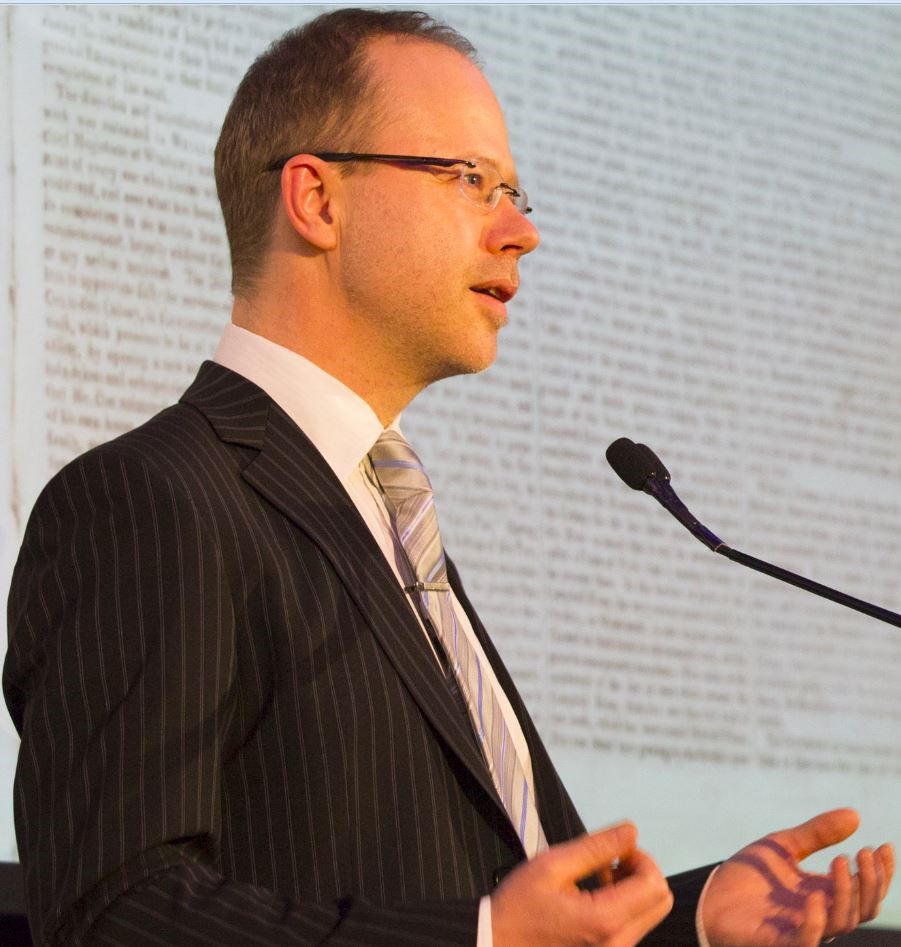
Paul Arthur is Vice-Chancellor’s Professorial Research Fellow, and Professor of Digital Humanities and Social Sciences, at Edith Cowan University, Western Australia. He speaks and publishes widely on major challenges and changes facing 21st-century society, from the global impacts of technology on communication, culture and identity to migration and human rights. Paul Arthur has over 100 publications including 13 books, and has received A$10M in grant funding, individually and in collaboration. His latest book is Open Scholarship in the Humanities (Bloomsbury 2024, with Lydia Hearn). A Fellow of the Royal Historical Society, he has held visiting positions in Europe, Asia-Pacific and North America, and given more than 50 keynote and plenary talks in 20 countries. Click here for full Profilesearch
recent
- Open Scholarship in the Humanities
- Border Crossings: Essays in Identity and Belonging
- Migration Experiences: Acknowledging the Past, and Sustaining the Present and Future
- Migrating People, Migrating Data: Digital Approaches to Migrant Heritage
- Migrant Nation
- Engaging Collections and Communities: Technology and Interactivity in Museums
- Digital Postmodernism and Postcolonialism
- Things Fall Apart: Identity in the Digital World
- Data Portraits: Identity, Privacy, and Surveillance
- Coda: Data Generation
Tag Cloud
18th Century Antipodes Australia Biography Cartography Collaboration Commemoration Communication Community Cross-Cultural Cultural Data Digital e-Research Exhibitions Experimental Fiction Genre Globalisation Heritage History Humanities Identity Informatics Infrastructure Interactive Interface Internet Life Writing Media Memory Mythology Narrative Networks Online Oral History Pacific Representation Storytelling Technology Textuality Theory Trauma Travel WarArchives
- November 2024 (1)
- June 2019 (1)
- December 2018 (1)
- November 2018 (1)
- April 2018 (1)
- March 2018 (1)
- January 2018 (1)
- October 2017 (1)
- April 2017 (1)
- September 2015 (1)
- May 2015 (2)
- November 2014 (2)
- October 2014 (2)
- September 2014 (2)
- August 2014 (1)
- March 2013 (1)
- December 2012 (1)
- February 2012 (2)
- November 2011 (2)
- April 2011 (3)
- February 2011 (1)
- December 2010 (2)
- November 2010 (1)
- April 2010 (1)
- July 2009 (1)
- March 2009 (1)
- February 2009 (1)
- January 2009 (1)
- October 2008 (1)
- September 2008 (1)
- August 2008 (1)
- May 2008 (1)
- April 2008 (1)
- March 2008 (1)
- January 2008 (1)
- August 2007 (1)
- January 2007 (1)
- November 2006 (1)
- July 2006 (1)
- October 2005 (1)
Categories
- 18th Century (3)
- Biography (12)
- Communication and Media Studies (23)
- Cultural Studies (38)
- Digital Scholarship (19)
- e-Research (12)
- Historical Studies (21)
- History (2)
- Humanities (22)
- Life Writing (23)
- Literary Studies (9)
- Museum Studies (3)
- Postcolonial Studies (6)
- Travel Writing (1)
feeds

Follow Paul



gmail [dot] com