» Next Entries
The Archives
-
Communication and Media Studies, Cultural Studies, Literary Studies
Digital Fabric, Narrative Threads
25.10.08 | Permalink | Comments Off on Digital Fabric, Narrative ThreadsThe traditional crafts of quilting, embroidering and weaving may appear to be a world away from the high tech fields of computer networking, digital interface design, and database development. However, the old and new are increasingly being linked through metaphors that reveal a great deal about changing attitudes to digital technologies as they become more established and widely accessible […] Today’s communication networks are structured around “patchwork” designs, software glitches are fixed with “patches,” computer processors are being described as “multi-threaded,” and over the past decade other “material metaphors” have been embraced as a means of conceptualising and giving form to our new world of amorphous digital texts. In particular, the quilt motif has been used in a variety of ways, including as a means of visualising interaction and information flows and as a template for digital interface design.
-
18th Century, Cultural Studies, Historical Studies, Humanities, Literary Studies, Postcolonial Studies
Fictions of Encounter
25.09.08 | Permalink | Comments Off on Fictions of EncounterThe “imaginary voyage” was an early form of the modern realist novel popular in Britain and France from the seventeenth to the early nineteenth centuries, set predominantly in the region of Australasia and the Pacific. As a branch of travel literature, it was linked intimately to the expansion of empire. Through repeated stories of successful colonizing schemes and heroic accounts of cross-cultural encounters between European travelers and the people of the antipodes, these texts allowed European readers to enjoy farfetched fantasies of colonization well before, and during, the period of actual colonial expansion. As in the case of the many better-known examples of literary fiction produced in the later period of European imperial dominance, imaginary voyage fiction helped embed social acceptance of colonial expansion by modeling cultural domination as natural, beneficial, and welcome.
-
18th Century, Cultural Studies, Historical Studies, Postcolonial Studies
Teaching and Learning Guide: Antipodean Myths Transformed
08.08.08 | Permalink | Comments Off on Teaching and Learning Guide: Antipodean Myths TransformedSample Syllabus:
Week 1: Introduction and Overview—Exploration and Colonisation of the Great South Land
- – The myth of the antipodes—the allure of the great south land
- – Gaps in maps—spaces for the imagination
Weeks 2–4: Fantasies of the Antipodes
- – The role of imaginary voyage texts—blending reality with fantasy, pre-programming colonisation
- – Myths of extreme difference
- – Myths of Indigenous populations’ welcoming attitude to colonial intrusion
- – Theories of otherness
Weeks 3–5: Entering the Antipodes
- – Early explorers’ contradictory responses to Terra Australis Incognita
- – Utopias and dystopias
- – First contact with Indigenous people—the concept of ‘terra nullius’ framed by myths
Weeks 6–8: Images of Contemporary Australia: Enduring Myths
- – The myth of terra nullius and the impact on Indigenous Australia
- – The ‘dead heart’ of Australia as the last unfathomed antipodean space
-
Cultural Studies, Digital Scholarship, Historical Studies, Humanities, Museum Studies
Exhibiting History: The Digital Future
25.04.08 | Permalink | Comments Off on Exhibiting History: The Digital FutureThis paper surveys the digital history field, highlighting trends across historical, cultural and literary studies, heritage, archaeology and geography, as well as library information, screen and media studies, multimedia production and interaction design. This broad field is increasingly relevant to museum practice as museums experiment with digital modes of presentation and communication, including virtual exhibitions and other online extensions of the physical visitor experience.
-
Cultural Studies, Literary Studies, Postcolonial Studies
Antipodean Myths Transformed
25.08.07 | Permalink | Comments Off on Antipodean Myths TransformedAustralia and the South Pacific held a special status in the eighteenth century: this was the farthest region from Europe and the last part of the earth remaining for Europeans to explore and chart. In the context of European nations’ own histories of discovering and exploring the world beyond Europe’s borders, this region is unique in the sense that no other part of the earth had such a substantial and well-documented body of European thought devoted to it over such a long period of time prior to its physical discovery. The ‘antipodes’ existed in the European imagination for approximately two thousand years before Europeans set foot on antipodean lands. Myths inspired explorers to go searching for the genuine antipodes, and voyages were often undertaken with the specific aim of finding the uncharted places that punctuated otherwise formless maps.
-
Communication and Media Studies, Digital Scholarship, Historical Studies, Humanities
Experimental Histories
25.01.07 | Permalink | Comments Off on Experimental HistoriesInteractive digital technologies are transforming the processes of research and production across all major academic disciplines. The changes are most significant in traditional disciplines. In that of history, online public access to digitised historical resources has meant that the materials of history are now available to anyone who has access to the internet. Previously, the study of archives was only open to the dedicated specialist with access to the world’s major library collections. Digital technologies have not only enhanced access to resources, but they are also enabling the development and growth of new kinds of content delivery and new modes of historical narration. Although the book is not likely to be superseded any time soon, the book now competes with experimental digital works that are relating history in new and highly interactive ways.
-
Communication and Media Studies, Cultural Studies, Digital Scholarship, Historical Studies
Hypermedia History: Changing Technologies of Representation
25.11.06 | Permalink | Comments Off on Hypermedia History: Changing Technologies of RepresentationTechnologies of representation are not just instruments of recording and reporting. Their basic attributes determine what it is actually possible to conceptualise, capture and articulate. Photography, to take a classic example, transformed people’s outlook on the world because it could provide an unrivalled visual framing of actuality. It had no equivalent in the prior traditions of visual communication. Technological invention spurs social change. By focussing on ‘technologies of representation’ I am not only concerned with the technological means that underpin specific forms of representation, although these fundamentally define the range of options available, but also with the ways of seeing and understanding that they open up. Tomas describes these beautifully as “a new type of amniotic environment for vision”.
-
Communication and Media Studies, Cultural Studies, e-Research, Humanities
Multimedia and the Narrative Frame
25.07.06 | Permalink | Comments Off on Multimedia and the Narrative FrameJanet Murray’s Hamlet on the Holodeck (1997), a landmark text written nearly a decade ago, set out to investigate the potential for interactive story forms at a time when digital interactivity was, for the first time, in the hands of the mainstream. Her book, which analyses a range of non-linear narrative models, continues to inspire those who wish to imagine the future of digital narrative textuality. The study of interactive narrative is now a vast field in its own right. Today there is extensive, vibrant debate on the evolution of digital narrative story forms, with theoretical commentary coming from perspectives as diverse as new media theory, literary studies, cinema studies, media arts and humanities computing.
-
Communication and Media Studies, Digital Scholarship, e-Research, Historical Studies
Interactive Histories
25.10.05 | Permalink | Comments Off on Interactive HistoriesIn this paper I discuss broad concepts that are at the centre of debates in the digital history field. The discussion ranges over four key concepts: digital interactivity, narrative, content and form. Digital interactivity is a shifting concept, the changes in its meaning directed by technological change. Narrative, which continues to be the primary mode for the telling of history, is gaining new meanings as interactive modes prompt the question of what can be considered ‘narrative’ and what cannot. Particular kinds of historical content lend themselves more readily to interactive representation, but to discuss this is to acknowledge that what counts as ‘history’ has been expanded immeasurably over the past decades. Finally, the many hybrid forms being utilised in the digital history field requires that new critical frameworks be developed to help theorise and differentiate those forms.
» Next Entries
about
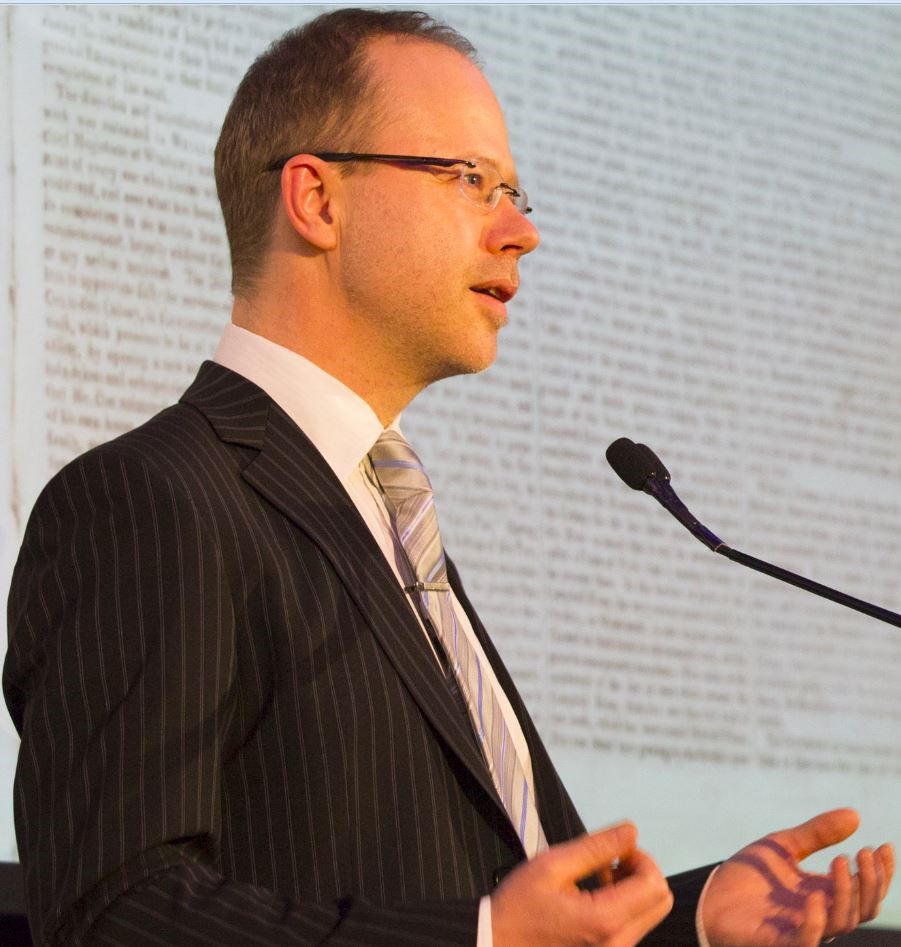
Paul Arthur is Vice-Chancellor’s Professorial Research Fellow, and Professor of Digital Humanities and Social Sciences, at Edith Cowan University, Western Australia. He speaks and publishes widely on major challenges and changes facing 21st-century society, from the global impacts of technology on communication, culture and identity to migration and human rights. Paul Arthur has over 100 publications including 13 books, and has received A$10M in grant funding, individually and in collaboration. His latest book is Open Scholarship in the Humanities (Bloomsbury 2024, with Lydia Hearn). A Fellow of the Royal Historical Society, he has held visiting positions in Europe, Asia-Pacific and North America, and given more than 50 keynote and plenary talks in 20 countries. Click here for full Profilesearch
recent
- Open Scholarship in the Humanities
- Border Crossings: Essays in Identity and Belonging
- Migration Experiences: Acknowledging the Past, and Sustaining the Present and Future
- Migrating People, Migrating Data: Digital Approaches to Migrant Heritage
- Migrant Nation
- Engaging Collections and Communities: Technology and Interactivity in Museums
- Digital Postmodernism and Postcolonialism
- Things Fall Apart: Identity in the Digital World
- Data Portraits: Identity, Privacy, and Surveillance
- Coda: Data Generation
Tag Cloud
18th Century Antipodes Australia Biography Cartography Collaboration Commemoration Communication Community Cross-Cultural Cultural Data Digital e-Research Exhibitions Experimental Fiction Genre Globalisation Heritage History Humanities Identity Informatics Infrastructure Interactive Interface Internet Life Writing Media Memory Mythology Narrative Networks Online Oral History Pacific Representation Storytelling Technology Textuality Theory Trauma Travel WarArchives
- November 2024 (1)
- June 2019 (1)
- December 2018 (1)
- November 2018 (1)
- April 2018 (1)
- March 2018 (1)
- January 2018 (1)
- October 2017 (1)
- April 2017 (1)
- September 2015 (1)
- May 2015 (2)
- November 2014 (2)
- October 2014 (2)
- September 2014 (2)
- August 2014 (1)
- March 2013 (1)
- December 2012 (1)
- February 2012 (2)
- November 2011 (2)
- April 2011 (3)
- February 2011 (1)
- December 2010 (2)
- November 2010 (1)
- April 2010 (1)
- July 2009 (1)
- March 2009 (1)
- February 2009 (1)
- January 2009 (1)
- October 2008 (1)
- September 2008 (1)
- August 2008 (1)
- May 2008 (1)
- April 2008 (1)
- March 2008 (1)
- January 2008 (1)
- August 2007 (1)
- January 2007 (1)
- November 2006 (1)
- July 2006 (1)
- October 2005 (1)
Categories
- 18th Century (3)
- Biography (12)
- Communication and Media Studies (23)
- Cultural Studies (38)
- Digital Scholarship (19)
- e-Research (12)
- Historical Studies (21)
- History (2)
- Humanities (22)
- Life Writing (23)
- Literary Studies (9)
- Museum Studies (3)
- Postcolonial Studies (6)
- Travel Writing (1)
feeds

Follow Paul



gmail [dot] com